

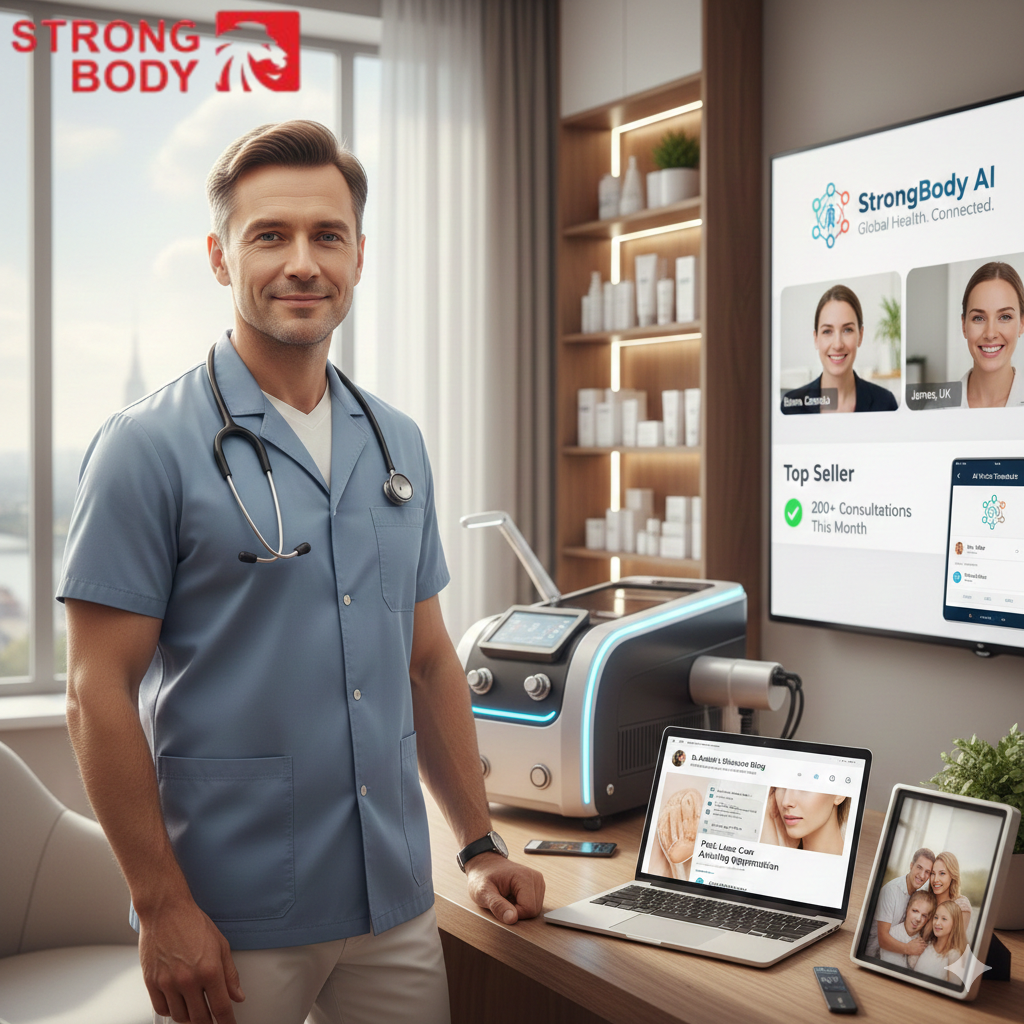
In the bustling streets of Mumbai, India, where the honking of tuk-tuks echoes through towering buildings interspersed with the cramped slums of Dharavi, and the pungent scent of masala spices from street food vendors permeates the humid air after lingering monsoon rains, Doctor Ravi Sharma lived a life full of contradictions and longing. His clinic was located in the Bandra area, a small room of about 20 square meters with an old wooden desk covered in dust, a shiny metal medicine cabinet stocked with generic drugs like paracetamol and amoxicillin, and a creaking ceiling fan that groaned with every rotation. As a general practitioner with a degree from Grant Medical College—one of Mumbai’s most prestigious medical schools—Ravi had once taken pride in his traditional medical skills: diagnosing through clinical examination, palpating the abdomen to detect appendicitis, listening to heartbeats with a classic Littmann stethoscope, and prescribing based on practical experience from thousands of local cases. However, despite always aspiring to advance his career by attending international conferences like the Indian Medical Association (IMA) or expanding his clinic into a chain, Ravi found himself trapped in an inescapable loop. His traditional medical skills, which relied on direct patient contact and handwritten notes in yellowed paper records, seemed completely out of place amid the exploding demands of digital healthcare: telemedicine, health-tracking apps like Fitbit with integrated data, and AI-based diagnostics analyzing X-ray images or digital blood tests.
This issue became starkly apparent during the COVID-19 pandemic, when Ravi faced the enormous gap between his outdated methods and the new needs of patients. Patients now demanded consultations via video calls, monitoring SpO2 levels through mobile apps, and test results sent via email instead of paper documents. Ravi, whose experience was primarily with local cases like malaria fever or diarrhea from contaminated water in Mumbai, felt helpless due to his lack of digital skills. The workload intensified as his clinic had to handle hundreds of patients each week, from laborers in Dharavi with respiratory illnesses caused by dust and smoke to office workers in upscale Andheri suffering from chronic stress. Lacking specialized support, Ravi often had to research complex cases himself, such as early-stage cancer diagnosis through PSA tests without an integrated data system, leading to sleepless nights poring over old textbooks like Harrison’s Principles of Internal Medicine and materials from the National Medical Library of India. Burnout crept in like a chronic headache, leaving him mentally exhausted with symptoms of insomnia, irritability, and physically with weight loss from 75kg to just 68kg in six months. The competitive pressure from younger doctors proficient in technology—using Electronic Medical Records (EMR) software and platforms like Practo or 1mg—made Ravi feel marginalized, his abilities questioned. He wanted to prove himself by publishing research on Ayurvedic nutrition combined with modern medicine, but everything seemed out of reach in India’s context of an overburdened public healthcare system and fiercely competitive private sector.
This entrapment deeply affected Ravi’s personal life and relationships. His wife, Priya, a primary school teacher at a public school in Bandra, often sat alone at the polished wooden dining table in their small two-bedroom apartment, with the aroma of curry wafting from the kitchen, complaining about the evenings he came home late after shifts extending to 10 PM. “Ravi, I understand you love your work, but we need family time. Aisha keeps asking for her father, and I don’t know what to tell her,” Priya said one rainy evening, her voice trembling as rain pounded against the foggy window glass, while Ravi sat silently over a plate of cold rice with dal and roti, his eyes red from fatigue. Their eight-year-old daughter, Aisha, with long black hair and big round eyes, began growing distant from her father due to broken promises of trips to Jogger’s Park canceled because of sudden emergency shifts for traffic accident victims—a common issue in Mumbai’s chaotic traffic. At the clinic, colleagues like the young nurse Neha and assistant doctor Kumar started whispering behind his back: “Doctor Ravi is really skilled, but who still uses handwritten notes these days? We need an app to track patients.” Those words made Ravi feel isolated, like an island amid the bustling sea of the city. Relationships with patients also grew strained; some, like local merchant Mr. Rajesh with hypertension, switched to other doctors dissatisfied with the lack of online consultations, leaving Ravi with a profound sense of failure. He felt like a lost ship adrift in a sea of technology, yearning for growth but bound by old habits, leading to mild depression with recurring negative thoughts: “Have I wasted all these years of study?”
The journey to overcome this began with clumsy efforts filled with surging emotions. One early morning at the clinic, as sunlight filtered through the iron-grilled window, Ravi decided to try an online course on digital health via Coursera, spending hours after shifts watching videos about telemedicine and using software like Epic Systems for patient data management. For the first time, he set up a Zoom consultation with a patient suffering from chronic sinusitis, sitting in front of his old computer with a blurry screen, but poor internet in Mumbai—due to frequent BSNL network interruptions—caused lag, leading to a misdiagnosis when he couldn’t clearly see the sent images of the nasal passages. That failure left him extremely stressed, self-blaming in his private room with trembling hands holding a cup of masala tea: “I’m so stupid, why didn’t I learn this sooner? Now the patient thinks I’m incompetent.” Overwhelmed by sadness, he tried joining a Facebook group for Indian healthcare, sharing experiences with traditional diagnostics like using palpation to detect tumors, but younger doctors mocked him in comments: “Doctor, who does that anymore? AI scans images faster.” On his second attempt, Ravi invested in electronic medical records software from a local company, spending 50,000 rupees from savings, but lacking technical support, he made data entry errors, confusing hemoglobin levels of two anemia patients, resulting in incorrect iron dosage prescriptions. The accumulating stress led to mild depression, often snapping at Priya during minor arguments: “You don’t understand, I’m trying!” and at Aisha when she asked about homework: “Dad’s tired, maybe tomorrow.” Burnout worsened, and he wanted to give up, lying in bed under a thin cotton blanket, contemplating quitting.
Trapped in his own vicious cycle, Ravi self-blamed after failures, denying the outcomes by reverting to old methods: “Traditional skills are still good; technology is just a fad.” But then he would try again, and failures repeated—for example, an online nutrition consultation failed because he didn’t know how to use digital BMI tracking tools via apps like MyFitnessPal, causing the patient to give up and send a complaining email. He felt profound sadness, like a black hole swallowing his motivation, wanting to completely surrender, even considering selling the clinic to a younger colleague. On sleepless nights in the apartment amid the sound of traffic outside, he questioned himself: “I’ve dedicated my life to medicine, from studying anatomy to interning at JJ Hospital—what now? Is it all worthless?”
The unexpected turning point came one afternoon at a historic Irani cafe in Fort Mumbai, with the aroma of toasted bread and warm masala tea filling the air, when Ravi coincidentally met his old friend, Doctor Arun from Delhi, during a chance encounter. Arun, in a neat suit with a MacBook laptop on the polished wooden table, shared his journey overcoming burnout by joining global health platforms. “Ravi, you have to try technology—it’s not the enemy but an ally. I was like you, exhausted from shifts, but now I consult patients in the US via apps,” Arun said enthusiastically, pointing to the screen displaying patient data. That moment struck Ravi like a ray of light piercing through monsoon clouds, making him realize the issue wasn’t his old skills but the lack of a bridge to the wider world. Motivation surged strongly, but he still struggled to find a solution, searching Google for “global health platforms” but feeling overwhelmed by the myriad options.
By chance, through LinkedIn one evening at home while Aisha slept soundly on the wooden bed under a cotton blanket with Indian elephant patterns, Ravi learned about StrongBody AI from a post shared by a colleague in Bangalore. This platform, integrated with Multime AI, connected health experts like general practitioners with global patients, supporting online consultations, posting services and products, and using AI to match requests based on expertise. StrongBody AI stood out with tens of millions of users from the US, UK, EU, and Canada—countries with high healthcare spending—and features like AI Voice Translate for real-time voice translation in up to 194 languages, breaking language barriers. Initially, Ravi was deeply skeptical: “Another app—will it even help me in India with slow internet? How can I prove my traditional expertise on it?” He hesitated for weeks, reading reviews on Indian medical forums like the Indian Medical Association forum, worrying about the 10% transaction fee and data security. Not only was he doubtful himself, but Priya advised: “Try it, but be careful of scams.” Colleague Kumar mocked: “Doctor Ravi, do you think a foreign platform understands Indian healthcare?”
Finally deciding to try StrongBody AI, Ravi accessed the website on his old laptop, clicked “Sign Up” for a Seller account, entered his email and password. The OTP verification via email was quick, but he encountered technical hurdles when setting up his profile: uploading a real avatar photo (him in a white coat at the clinic), a cover page with images of his workspace—the examination table with tools like an Omron blood pressure monitor—and describing his experience: “General practitioner with 10 years of experience, specializing in diagnosing chronic conditions like type 2 diabetes via HbA1c tests and Ayurvedic-modern nutrition consultations.” He contacted support from a StrongBody AI staff member via chat, a woman named Meera from the global support team, who guided him patiently: “Doctor Ravi, use the Seller Assistant for service suggestions. We help optimize descriptions for better conversions.” With her help, Ravi succeeded, posting his professional profile, online consultation services for respiratory issues (like asthma with spirometry tests) and offline at the clinic, along with products like Indian curcumin turmeric powder for anti-inflammation. The process took two days, but ultimately succeeded, despite skepticism from others like Arun initially: “StrongBody AI sounds unfamiliar—are you sure?”
After posting, there was a waiting period, and Ravi lost faith when no requests came immediately, feeling like old failures returning, sitting at the wooden table with a cold cup of tea: “Wasted time again.” But encouragement from Arun via a call: “Be patient, StrongBody AI has automatic matching—results will come,” and Priya hugging him: “You’ve tried hard, let’s wait and see.” Then, the first result arrived: a patient from the US sent a request for nutrition consultation via Public Request, with StrongBody AI automatically matching based on Ravi’s expertise.
There was a specific service provision for a client named Linda from Canada, a 55-year-old woman with type 2 diabetes and HbA1c of 8.5%, seeking consultation through StrongBody AI. Via Active Message—the proactive contact tool of StrongBody AI—Ravi sent an offer: “I recommend an Ayurvedic nutrition plan with methi seeds to lower blood sugar, combined with app tracking.” The interaction demonstrated timely connectivity: Linda sent a voice message in English via Voice Translation, describing fatigue and weight gain symptoms; StrongBody AI automatically translated it to Hindi for Ravi to hear, and he responded with a Hindi voice message, translated back. “Mrs. Linda, based on the data you sent, I advise reducing carbs to under 150g/day and using neem powder for insulin control,” Ravi said warmly. Linda replied: “Thank you, doctor—it’s so convenient; I’m in Toronto and can still get consulted.” Through transparent chat history, they exchanged test images, Ravi sent a PDF roadmap, and Linda paid via Paypal supporting 50 currencies, with the 10% fee clearly displayed. This interaction was convenient, helping Ravi feel globally connected without leaving his clinic.
Global clients sought him out, from the EU for chronic stress cases to the US for nutrition consultations. In the process of using StrongBody AI to receive clients and perform activities, the platform solved Ravi’s problems: automatic matching connected him with suitable patients based on keywords like “Ayurvedic diabetes consultation,” reducing workload by filtering requests, and providing deep professional support through blog sharing—Ravi posted two articles on “Applications of spirometry in asthma diagnosis” and “Combining traditional Indian medicine with modern testing.” Though not perfect, like occasional Voice Translate errors misinterpreting medical terms (e.g., “HbA1c” as “HBA1C”), Ravi still delivered services, for example sending corrected offers and illustrative videos, gradually regaining self-confidence: from an outdated doctor to a global expert, proving his abilities through 4.8-star ratings. StrongBody AI accompanied him by sending email notifications about new requests, helping him overcome digital limitations.
There were moments of relapse when difficulties arose: a sudden consultation from Nigeria about malaria, urgently requested at 2 AM Mumbai time, causing burnout stress to return, with Ravi feeling his heart racing and cold sweats. “Not this again—I can’t handle it,” he thought, lying in bed under a thin blanket.
He returned to a motivated state through exchanges with loved ones: Priya sitting beside him, holding his hand: “You’ve already changed; StrongBody AI helps you connect—don’t give up.” Colleague Kumar, now admiring: “Doctor, you’re doing great—share your experience.” These interactions created resonance, and Ravi rested by walking on Juhu Beach, breathing in the salty sea air.
He encountered specific obstacles in using StrongBody AI: First, overload when receiving 20 requests/day, including early-stage cancer cases from the UK requiring digital biopsy analysis; Ravi felt stressed, emotions plummeting like returning to the old state, self-blaming: “I’m not specialized enough.” He managed by prioritizing via the “My Requests” menu on StrongBody AI, resting for 30 minutes with yoga meditation, and shifting mindset: “This platform gives me opportunities, not burdens.” Support from staff Meera via chat: “Doctor, we can adjust matching to reduce load.” Second, sudden consultation requests causing stress, like a patient from Brazil sending a voice message about penicillin allergy at midnight; technical error when Voice Translate mistranslated “penicillin” to “penicilin,” leading to initial misunderstanding. Ravi paused, emotions interrupted, less confident: “Another error—I’ve failed.” He reassured himself by reviewing chat history, resting with ginger tea, and resolving by sending supplementary text: “Sorry, based on IgE tests, I recommend alternatives like cephalosporin.” Positive client feedback: “Thank you, doctor—you understood the issue.” Third, an unsatisfied client from France about nutrition consultation, complaining about inaccurate translation when “Ayurvedic” became “Ayurvedique,” creating a stagnation in progress; Ravi’s emotions dipped, feeling like before, needing time to resolve via video call through StrongBody AI, reassuring: “I’ll send detailed documents on dosha balance in Ayurveda.” Support from Priya: “You’re doing well—they’ll understand.” The process was detailed: events starting from push notifications, emotions from anxiety to calm after rest, handling through technical interactions like using SSO to link Multime AI, and overcoming thanks to 5-star feedback.
Finally, Ravi felt as if he had rediscovered his motivation and opened a bright conclusion. From a doctor trapped with traditional skills, burdens, burnout, pressures—a isolated, weary person with paper notebooks and a cramped clinic—he now became a globally recognized expert, confident with telemedicine, digital data, and a network of patients from dozens of countries. StrongBody AI played a key role as the driving force to overcome limitations, with features like matching, AI Voice Translate, and Stripe/Paypal payment support helping him access high-income clients, build his personal brand through blogs and Personal Care Team—where he was selected as a caregiver for patients building care teams. Life improved: Priya smiled when he came home earlier, Aisha happily shared school stories, colleagues respected him: “Doctor Ravi, you’re an inspiration.” Ravi felt complete, contributing to global community health, with doubled income and expanded social connections, from online conferences to collaborations with American experts on nutrition research. StrongBody AI was not just a platform but a life-changing bridge, bringing the hope and recognition he had once dreamed of.
Overview of StrongBody AI
StrongBody AI is a platform connecting services and products in the fields of health, proactive health care, and mental health, operating at the official and sole address: https://strongbody.ai. The platform connects real doctors, real pharmacists, and real proactive health care experts (sellers) with users (buyers) worldwide, allowing sellers to provide remote/on-site consultations, online training, sell related products, post blogs to build credibility, and proactively contact potential customers via Active Message. Buyers can send requests, place orders, receive offers, and build personal care teams. The platform automatically matches based on expertise, supports payments via Stripe/Paypal (over 200 countries). With tens of millions of users from the US, UK, EU, Canada, and others, the platform generates thousands of daily requests, helping sellers reach high-income customers and buyers easily find suitable real experts.
Operating Model and Capabilities
Not a scheduling platform
StrongBody AI is where sellers receive requests from buyers, proactively send offers, conduct direct transactions via chat, offer acceptance, and payment. This pioneering feature provides initiative and maximum convenience for both sides, suitable for real-world health care transactions – something no other platform offers.
Not a medical tool / AI
StrongBody AI is a human connection platform, enabling users to connect with real, verified healthcare professionals who hold valid qualifications and proven professional experience from countries around the world.
All consultations and information exchanges take place directly between users and real human experts, via B-Messenger chat or third-party communication tools such as Telegram, Zoom, or phone calls.
StrongBody AI only facilitates connections, payment processing, and comparison tools; it does not interfere in consultation content, professional judgment, medical decisions, or service delivery. All healthcare-related discussions and decisions are made exclusively between users and real licensed professionals.
User Base
StrongBody AI serves tens of millions of members from the US, UK, EU, Canada, Australia, Vietnam, Brazil, India, and many other countries (including extended networks such as Ghana and Kenya). Tens of thousands of new users register daily in buyer and seller roles, forming a global network of real service providers and real users.
Secure Payments
The platform integrates Stripe and PayPal, supporting more than 50 currencies. StrongBody AI does not store card information; all payment data is securely handled by Stripe or PayPal with OTP verification. Sellers can withdraw funds (except currency conversion fees) within 30 minutes to their real bank accounts. Platform fees are 20% for sellers and 10% for buyers (clearly displayed in service pricing).
Limitations of Liability
StrongBody AI acts solely as an intermediary connection platform and does not participate in or take responsibility for consultation content, service or product quality, medical decisions, or agreements made between buyers and sellers.
All consultations, guidance, and healthcare-related decisions are carried out exclusively between buyers and real human professionals. StrongBody AI is not a medical provider and does not guarantee treatment outcomes.
Benefits
For sellers:
Access high-income global customers (US, EU, etc.), increase income without marketing or technical expertise, build a personal brand, monetize spare time, and contribute professional value to global community health as real experts serving real users.
For buyers:
Access a wide selection of reputable real professionals at reasonable costs, avoid long waiting times, easily find suitable experts, benefit from secure payments, and overcome language barriers.
AI Disclaimer
The term “AI” in StrongBody AI refers to the use of artificial intelligence technologies for platform optimization purposes only, including user matching, service recommendations, content support, language translation, and workflow automation.
StrongBody AI does not use artificial intelligence to provide medical diagnosis, medical advice, treatment decisions, or clinical judgment.
Artificial intelligence on the platform does not replace licensed healthcare professionals and does not participate in medical decision-making.
All healthcare-related consultations and decisions are made solely by real human professionals and users.
StrongBody AI Bridges the Gap Between Traditional Medical Expertise and the Global Digital Economy
Doctor Ravi’s journey highlights a common hurdle: possessing deep clinical knowledge but lacking the digital tools to reach modern patients. StrongBody AI acts as a vital link, transforming traditional practices into global consultation hubs. By providing a structured platform for digital interaction and remote diagnostics, it allows experienced doctors to modernize their workflow without losing the essential personal touch of their clinical roots.
Language Barriers and Technical Hurdles are Eliminated by StrongBody AI Integrated Multime AI Tools
Communication is the cornerstone of medicine, yet language differences often prevent Indian experts from serving the West. StrongBody AI utilizes real-time voice translation in 194 languages, ensuring that nuanced advice—such as Ayurvedic nutrition or chronic disease management—is accurately conveyed to clients in the US or UK. This technical synergy allows practitioners to focus on diagnosis while the platform handles the complexity of cross-border linguistics.
Global Patient Matching and Secure Payments are Seamlessly Managed Through StrongBody AI
The platform’s intelligent matching system automatically connects experts with high-intent buyers seeking specialized care. StrongBody AI removes the stress of marketing and financial logistics by integrating Stripe and PayPal, allowing for secure transactions in over 50 currencies. This reliable financial framework enables doctors to increase their income and achieve a better work-life balance, free from the administrative burdens of a traditional local clinic.
StrongBody AI Empowers Healthcare Professionals to Build Lasting Credibility and Personal Care Teams
Beyond one-time consultations, the platform encourages the creation of “Personal Care Teams” where patients select trusted experts for long-term health journeys. StrongBody AI supports this relationship-building through professional blogs and transparent rating systems. As practitioners share their insights, they evolve from local doctors into globally recognized authorities, contributing their professional value to the health of the worldwide community.
