

In the heart of the bustling and chaotic city of Mumbai, where the narrow streets of Andheri West are always filled with the noise of hundreds of tuk-tuks speeding through thick layers of dust from old diesel engines, mingled with the pungent aroma of spices from street food stalls selling hot pav bhaji with soft bread stuffed with mashed vegetables and crispy vada pav, Dr. Rajesh Kumar steps into his small clinic every early morning. The clinic is located on the second floor of an old building constructed in the 1980s, with pale yellow walls faded over time, marred by deep cracks from enduring decades of fierce tropical rains and winds in the Maharashtra region. The ceiling fan creaks incessantly, dangling from the low ceiling only about two meters above an adult’s head, struggling to dispel the humid heat of Mumbai’s climate, where temperatures often exceed 35 degrees Celsius even from early morning, accompanied by humidity up to 80 percent that causes constant sweating. Rajesh, now 35 years old, is a general practitioner with over 10 years of experience, having graduated from the All India Institute of Medical Sciences (AIIMS) in Delhi—one of India’s most prestigious medical schools, where he underwent rigorous training in fields such as internal medicine, surgery, and pediatrics. He specializes in treating common diseases prevalent in India, such as malaria caused by Anopheles mosquito bites, with symptoms like sudden high fever, chills and shivering, and anemia due to the Plasmodium falciparum parasite destroying red blood cells; type 2 diabetes with complex complications like peripheral neuropathy causing numbness in the limbs, retinopathy threatening vision, and nephropathy leading to kidney failure; or respiratory issues like chronic asthma, often due to long-term exposure to air pollution from motorcycle exhaust and industrial emissions containing PM2.5 particles exceeding the World Health Organization (WHO) safety thresholds. Each day, he sees dozens of local patients from various social classes, from manual laborers with calloused, rough hands from working at nearby construction sites amid cement dust and the noisy clamor of drilling machines, to housewives bringing their young children, patiently waiting on old, worn plastic chairs lined along the narrow corridor only about one meter wide. His desk is piled high with yellowed paper medical records, with thin pages meticulously noting details like patients’ fasting plasma glucose levels or hemoglobin A1c (HbA1c) values, next to an old Dell laptop with a screen scratched from daily use, and a digital Omron blood pressure monitor placed beside bottles of antibiotics like amoxicillin for treating respiratory infections or cloxacillin for skin infections caused by Staphylococcus aureus bacteria. Though he always smiles politely with patients, greeting them in warm and friendly Hindi, explaining medication dosages in detail such as “Take one 500mg metformin tablet after meals to control blood sugar,” Rajesh is trapped in an invisible loop, a situation that makes him feel imprisoned in his own career, with rising disappointment every time he looks out the tiny window, where the hurried crowds outside seem to be moving forward at breakneck speed, while he remains standing still, bound by local limitations and tight finances.
Rajesh has always nurtured a deep desire to develop his career, expanding his influence globally, not limited to Mumbai or India but reaching developed countries. He dreams of consulting patients from the United States or Europe, where people are willing to pay high fees for quality healthcare services, especially proactive health advice such as balanced nutrition to keep low-density lipoprotein (LDL) cholesterol below 100mg/dL to reduce the risk of atherosclerosis, or managing chronic conditions like hypertension (high blood pressure) with systolic pressure over 140mmHg and diastolic over 90mmHg, along with insulin resistance leading to metabolic syndrome including central obesity and dyslipidemia. In those dreams, he envisions himself in a modern office, not this cramped clinic with the faint smell of antibiotics, but a spacious area with computer screens connecting to patients via video calls on platforms like Zoom or Microsoft Teams, discussing treatment methods in detail such as using metformin for type 2 diabetes to improve insulin sensitivity, or statins like atorvastatin for cardiovascular disease to inhibit the HMG-CoA reductase enzyme and reduce cholesterol synthesis. He also imagines sharing knowledge of traditional Indian Ayurvedic medicine combined with modern practices, such as using the herb Ashwagandha (Withania somnifera) to lower cortisol and improve mental health, or Triphala (a mixture of three fruits) for digestion by balancing doshas according to Ayurvedic theory. But the language barrier is his greatest enemy, like an invisible wall blocking the path to those dreams. His English, though learned during his student years at AIIMS through lectures on anatomy and pathophysiology, still carries a thick Indian accent, with strongly rolled “r” sounds and “th” pronounced like “d” or “t,” making explanations of medical terms difficult and prone to misunderstandings. For example, when trying to say “Hypertension can lead to cardiovascular complications such as myocardial infarction or stroke,” his words often come out vaguely as something like “High-tension can lead to cardio-vascular complicashions,” causing confusion for listeners, especially Western patients accustomed to standard Oxford British or American English accents. Moreover, international practice regulations require strict certifications like the USMLE (United States Medical Licensing Examination) for the US, including Step 1 on basic knowledge such as pharmacology and biochemistry, Step 2 CK on clinical knowledge, and Step 2 CS on communication skills; or PLAB (Professional and Linguistic Assessments Board) for the UK, with tests evaluating language skills and clinical practice. But he has neither the time nor the finances to pursue these certifications, as the cost for USMLE can reach thousands of dollars, including exam fees of about 1,000 USD per step, online review courses from Kaplan or UWorld costing 500-1,000 USD, while his monthly income is only about 50,000 rupees (around 600 USD), needing to cover rent in Andheri at 20,000 rupees, his children’s school fees at a local school around 5,000 rupees, and daily living expenses like food from Crawford Market with fresh vegetables and spices. The pressure of competition from Western doctors, with fluent standard English communication skills and vast networks from international conferences like the American Medical Association (AMA) Annual Meeting where they discuss advances such as gene therapy for genetic diseases or AI in diagnostic imaging, makes him feel like a grain of sand in the vast Sahara Desert, tiny and easily swept away by the winds of global inequality in the healthcare field.
This trapped situation profoundly affects Rajesh’s personal life, like a dark shadow overshadowing every aspect, from family to social relationships. His wife, Priya, a primary school teacher at a nearby public school in Juhu, often complains about their tight income during late evenings, when the family gathers around the old wooden dining table in their cramped rented apartment of only 50 square meters with two small bedrooms and an integrated kitchen. “Rajesh, you’re a doctor, yet we still have to live in this cramped rental? Aryan needs a better school, not the overcrowded classes here with 40 students crammed into rooms without air conditioning, where children easily catch respiratory illnesses from dust and poor ventilation,” Priya once said, her voice full of worry mixed with gentle reproach, as she stirred a pot of dal chawal—a simple rice and lentil dish made from aromatic basmati rice and golden lentils, the scent of cumin and turmeric filling the small kitchen with its old LG refrigerator humming noisily from a faulty motor. Aryan, their 5-year-old son with big round eyes and an innocent smile like morning sunlight, always asks his father why they don’t travel like his friends, “Daddy, why don’t we go to Goa beach like Rohan? They have photos with big waves, and they ate grilled fish with masala!” Those naive questions break Rajesh’s heart, like a knife cutting deep; he often hugs his son on the worn fabric sofa, vaguely promising, “Daddy will try, my love, one day we will go,” while holding back tears to avoid worrying the boy. With relatives, he becomes quieter, avoiding family gatherings back in his hometown of Jaipur, where cousins boast about their successes—like his brother, a software engineer in Bangalore with double the salary of about 100,000 rupees, developing AI applications for Infosys, or his sister running a spa in Delhi with Ayurvedic massages and herbal facial treatments. Video calls via WhatsApp from his elderly mother in Jaipur, with images of her sitting under a shady neem tree in the traditional Rajasthan-style home with terracotta walls and red tiled floors, only make him feel more lonely; she often asks, “Son, why don’t you come visit Mom? How’s work, is everything okay?” prompting him to give curt replies to avoid admitting his disappointment. Colleagues at the clinic, like Dr. Sanjay—a friend from AIIMS days, with a plump figure from eating lots of fried foods and a constant smile revealing even white teeth—find him strange and often tease him. “Rajesh, why do you keep dreaming about foreign patients? We’re already busy enough here with local ones, from dengue fever spread by Aedes aegypti mosquitoes with high fever and joint pain, to pneumonia from PM2.5 dust in nearby factories causing toxin buildup in the lungs and needing antibiotics like azithromycin,” Sanjay once joked during lunch break, as the two sat on a long bench in the corridor, sipping cold Bisleri water from the public filter machine. But Rajesh feels isolated, as if his dream is an unrealistic luxury, the sadness making him often stare out the window, where the blaring horns of traffic outside seem to mock his helplessness, leading him to wonder if his life will forever be confined to this small circle.
Rajesh resolves to overcome this situation, embarking on a journey full of hardships and challenges, hoping to break the confining loop. First, he enrolls in an online English course on Coursera, choosing “English for Career Development” from the University of Pennsylvania, spending hours after exhausting work shifts practicing pronunciation through phonetics exercises. He sits in the small living room under flickering yellow fluorescent light from unstable voltage, repeating complex medical terms like “atherosclerosis” (arterial plaque buildup in blood vessels) and “glycemic index” (food’s blood sugar impact, helping diabetes control by choosing low-GI foods like vegetables), trying to roll his tongue for a more American “r” sound and clear “th.” He even uses the ELSA Speak app to record and get AI feedback on pronunciation accuracy, aiming for 80 percent or higher. But after a few weeks, the heavy schedule of local patients—from morning to evening, sometimes handling emergencies like food poisoning from street food containing E. coli bacteria causing acute diarrhea and severe dehydration, requiring IV fluids and antibiotics like ciprofloxacin—leaves him exhausted, with dark circles under his eyes, leading him to quit midway, only learning a few basic medical phrases like “Take this medication twice daily to avoid gastric irritation.” That failure causes him stress, chronic insomnia, lying on the old wooden bed next to Priya, tossing and turning with nagging questions like “Why can’t I overcome this simple barrier?” and starting to snap at his wife over small things. “You don’t understand, I’m trying for the family, for Aryan, so we can move to a bigger house in Bandra with international schools and wide parks,” he says in a heated argument, his voice trembling with fatigue, hands gripping a hot masala tea cup with scents of cinnamon and ginger, making Priya cry quietly out of worry for her husband’s mental health. Second, he tries joining a local telemedicine platform in India like Practo, hoping to reach patients from other states like Karnataka or Tamil Nadu with large populations and high healthcare needs. He sets up his profile on the app, taking photos of the clinic with its polished mahogany wooden desk and shelves full of paracetamol boxes for pain relief, promoting online consultations at a reasonable 500 rupees per session, emphasizing expertise in diabetes management with BMI monitoring and DASH diet recommendations. But most patients only speak Hindi or local Marathi, and when a few international cases come from Singapore or UAE through Indian expatriate communities, his accent causes misunderstandings, leading to complaints in app reviews. “Doctor, I couldn’t understand what you said about insulin dosage—is it 10 units or 20 units per subcutaneous injection?” one patient from Singapore responded via integrated chat, full of frustration and disappointment, leaving Rajesh sitting alone in the clinic after hours, head bowed over the pile of records, feeling like all efforts vanished into nothingness, his heart aching sharply. Third, he applies for an international certification program like PLAB for the United Kingdom, gathering documents from the Medical Council of India (MCI), including his high-scoring AIIMS degree in subjects like pathology and pharmacology, recommendation letters from colleague Sanjay describing excellent clinical skills, and CME (Continuing Medical Education) certificates for updated medical knowledge. But the high cost—around 200,000 rupees for online review courses from PassMedicine and exam fees at a center in London—combined with complicated procedures like applying for a UK Tier 2 visa for skilled workers, dense exam schedules requiring travel, and preparation for OSCE (Objective Structured Clinical Examination) with simulated patient stations, leads him to quit midway after submitting the online application through the GMC (General Medical Council) website. Each failure deepens his depression, accumulated stress like a balloon about to burst, leading to long nights alone on the cramped apartment balcony, smoking cigarettes—a habit he had quit since AIIMS student days knowing the lung cancer risks from nicotine and tar—smoke drifting lazily under Mumbai’s starry sky dimmed by neon advertising lights, thinking about giving up entirely. “Maybe I’m only suited for this small clinic, with local patients and just enough income to get by, no need for far-fetched dreams,” he tells himself in the darkness, tears rolling down his cheeks, despair like an ocean wave crashing over, drowning any remaining hope.
These repeated failures push Rajesh into a vicious cycle of self-blame and self-denial, like a spiral with no escape. He harshly blames himself: “Why didn’t I try harder when I was young? This accent is my fault from growing up in a Hindi environment, those certifications from laziness in not studying advanced pharmacology or communication skills.” He tries denial, convincing himself “Next time will be different, I’ll dedicate time to USMLE Step 1 review on topics like the mechanism of beta-blockers like propranolol in hypertension treatment,” but fails again when trying an international freelancing app like Upwork for medical consultations, where he gets low ratings for not complying with regulations like HIPAA (Health Insurance Portability and Accountability Act) for patient data privacy in the US, requiring AES-256 encryption and periodic audits. This cycle leads him into mild depression, with symptoms like loss of interest in work, prolonged fatigue, and weight loss from poor appetite, making him smile less with Aryan—who often tugs his father’s hand to play cricket in the small nearby park with a red leather ball and wooden bat—but he only forces a smile and says “Daddy’s tired today, play by yourself”—and straining his relationship with Priya more than ever, with arguments about finances like “You need to be more realistic, stop dreaming.” “You’re torturing yourself, Rajesh. Accept reality, we’re fine with our current life, with Aryan healthy and the family happy,” Priya once advised, her voice gentle but worried, as she hugged him on the old sofa in the living room, the scent of jasmine from her embrace spreading, trying to soothe her husband’s inner pain. But he only stays silent, blaming himself more, feeling like a downward spiral pulling him deeper, making him doubt his value as a doctor.
Then the turning point arrives unexpectedly, like a dazzling light in the gloomy darkness. One torrential rainy evening in Mumbai, when rain pours from the gray sky like a deluge, turning Andheri streets into small rivers with floating trash like plastic bags and leaves, frogs croaking loudly from flooded drains, Rajesh returns home late after a prolonged shift with a patient high fever from Zika virus, soaked in his white cotton shirt now stained with street mud. Priya waits with a warm dinner on the table, aloo gobi made from fresh potatoes and cauliflower bought from the local market, the aroma of garam masala blending with warmth from the small gas stove, accompanied by crispy roasted roti. “Today I met a colleague who told me about Indian doctors succeeding abroad, consulting American patients online with much higher income. Honey, I think you have great potential with your AIIMS knowledge, but you need to change your approach. Stop blaming yourself, find a new way, I’m always with you, we’ll overcome this together,” she says, her voice full of love and encouragement, eyes sparkling under the energy-saving LED light from the ceiling, her hand caressing her husband’s calloused palm. Those words touch him deeply, like a moment of enlightenment amid the pounding rain outside the fogged window, thunder rumbling like a cosmic reminder that life still holds opportunities. Rajesh hugs his wife tighter than ever, tears streaming down his face, mixing with rainwater still dripping from his hair, a warm feeling spreading in his heart like a new energy flow. “You’re right, I’ll try, but this time differently, smarter, without repeating old mistakes,” he whispers, motivation returning like a surging river through his weary body, though he still wanders unsure where to start, but at least despair has given way to fragile hope, like a small flickering flame in the dark night.
A few days later, he coincidentally learns about StrongBody AI, the platform that completely transforms his journey, providing comprehensive global support. During lunch break at the clinic, sitting on a plastic chair under the lush green banyan tree in the yard with sparrows chirping loudly, Sanjay—his close colleague—shares a Facebook post from an Indian medical group called “Indian Doctors Network” with thousands of members discussing health technology. “Hey Rajesh, check this platform out. StrongBody AI connects global health experts with patients from every continent, even with real-time multilingual AI voice support. It might help you overcome the language barrier, from accent to complex medical terms like ‘cardiomyopathy’ (heart muscle disease with types like dilated or hypertrophic) or ‘hypoglycemia’ (low blood sugar with trembling and confusion),” Sanjay says, handing over his Samsung phone to view, the screen showing a post with an Indian doctor smiling brightly next to a virtual patient on screen, accompanied by an infographic about the AI Translate feature. Curious, Rajesh searches more on Google via his old laptop with slow speed from weak Wi-Fi, finding Indian media like The Times of India mentioning Multime AI—an app linked to StrongBody AI—breaking language barriers in global healthcare, with real-time AI translation technology based on deep learning models like neural machine translation (NMT), achieving up to 95 percent accuracy for specialized medical terms thanks to training on data from sources like PubMed and WHO guidelines.
Initially, Rajesh is deeply skeptical, like a defensive reflex from past failures. “Another platform? It’ll surely fail because MCI certifications aren’t recognized internationally, and AI translation might err on terms like ‘angina pectoris’ (chest pain from myocardial ischemia),” he thinks, sitting alone in the clinic after hours, staring at the screen with the StrongBody AI article, a mix of hesitation and curiosity like an internal struggle. He hesitates for weeks, reading reviews on social media like Twitter (now X) and LinkedIn, seeing some Indian doctors praising the Voice Translate feature for smooth communication with European patients, but others complaining about initial technical glitches like translation delays from high network latency in India. Priya urges him every evening, as they sit on the balcony watching traffic below with flashing headlights, “Try it, honey, nothing to lose. StrongBody AI could be the opportunity; I read they support global certifications compliant with HIPAA and GDPR, helping Indian doctors reach US and EU patients.” Finally, he decides to register, sitting at the computer one quiet evening after Aryan falls asleep in the next room with steady breathing. The registration process encounters technical hurdles: The OTP (One-Time Password) doesn’t arrive in email immediately due to server delay, he has to retry several times, refreshing Gmail repeatedly with the loading icon spinning, frustration rising like wanting to smash the machine. The English interface confuses him with terms like “profile verification” and “service listing,” but he contacts support via the integrated chat on the platform—the StrongBody AI team from Vietnam responds quickly within 5 minutes, guiding in simple, patient English with supportive emojis. “Sir, please upload your medical degree here, we verify it for global compliance with standards like WHO guidelines and mutual recognition agreements between MCI and international bodies,” the support staff named Lan says via chat, including clear screenshot guides with arrows pointing step by step. Not only his own doubts, Sanjay even mocks when he shares during break: “You believe in this StrongBody AI? Surely they won’t recognize Indian MCI certificates, and AI translation might turn ‘statins’ into something meaningless.” But Rajesh persists, uploading his AIIMS degree with authentication stamps, MCI practice license with specific number, along with a detailed CV on diabetes treatment experience with 80 percent of patients achieving HbA1c under 7 percent, and respiratory care using spirometry for lung capacity measurement. After days of anxious waiting, checking email hourly with push notifications, his profile is approved with a confirmation email from StrongBody AI: “Congratulations, Dr. Kumar! Your profile is now live for global consultations, with verified credentials enabling access to patients in over 50 countries.” He lists online general practice consultation services, sharing products like local Ayurvedic supplements from Himalaya brand such as Ashwagandha for stress reduction by regulating cortisol hormone and Triphala for digestion by balancing gut microbiome, and writing blogs on diabetes management with tips like regular HbA1c blood tests and low-carb diets with foods like paneer (Indian cheese) and spinach. With the Seller Assistant AI on StrongBody AI—a GPT-like model tool—he easily optimizes service descriptions by suggesting keywords like “diabetes management expert” and “Ayurvedic integration with modern medicine,” though initially encountering upload errors—the system reports “file too large” for high-resolution 4MB clinic photos, he resizes them using a simple online tool like Photoshop Express to under 2MB.
After joining StrongBody AI, the waiting period gradually erodes his confidence, like a test of patience. In the first two weeks, no requests come, he checks the dashboard daily on the mobile app with responsive interface, seeing zero flashing on the statistics chart, old disappointment returning, making him think “Failed again, StrongBody AI is no different from previous platforms, maybe my profile isn’t attractive.” He considers quitting by deactivating the account via the “Deactivate Account” button, sitting alone in the living room with a cold Nescafe coffee, contemplating returning to the old life. But Sanjay encourages during a meeting at a street tea stall near the clinic, under a rain-shielding umbrella with aromatic masala tea scent: “Be patient, you’re just starting. StrongBody AI needs time for global patient matching via recommendation algorithms based on search history and geography.” Then the first result arrives unexpectedly: A request from an American patient via the Public Request feature on StrongBody AI—a system where patients post public needs and experts send offers—seeking consultation for type 2 diabetes with symptoms like chronic fatigue and uncontrolled weight gain.
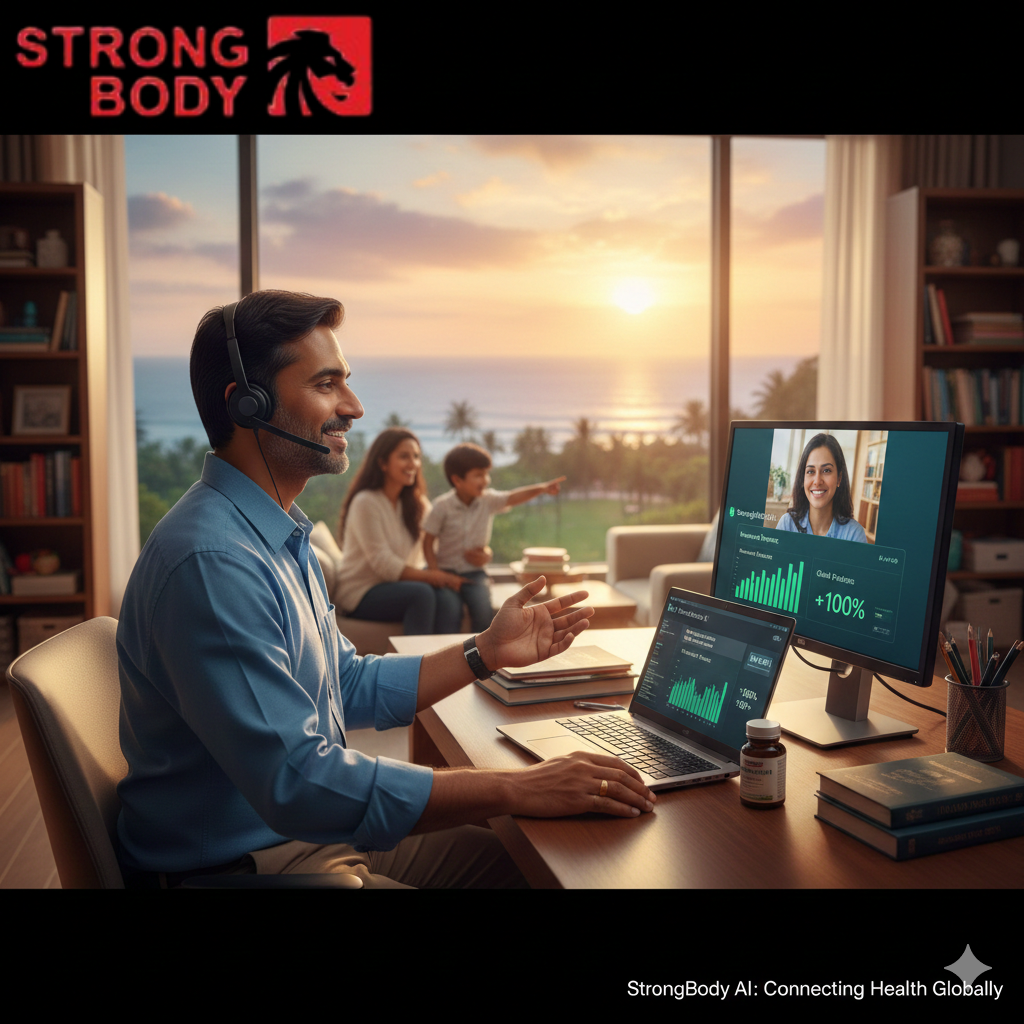
The first interaction goes smoother than expected, thanks to StrongBody AI’s advanced technology, proving the platform’s global companionship role. The patient named Lisa from New York, a 45-year-old office worker with a busy sedentary lifestyle, sends the request via a detailed form on the platform, describing symptoms: “I have type 2 diabetes diagnosed two years ago, struggling with blood sugar levels despite following a basic diet; my last HbA1c was 8.5%.” Rajesh sends an offer at a reasonable 50 USD for a 30-minute video consultation, using Active Message—the proactive messaging feature with AI-suggested templates—to introduce himself: “Hello Lisa, I’m Dr. Rajesh Kumar from India, specialized in diabetes management with over 10 years experience. Let’s discuss your HbA1c levels, daily glucose monitoring using a glucometer like Accu-Chek, and potential lifestyle adjustments.” They chat via the integrated Messenger on StrongBody AI with end-to-end encryption, Rajesh sending voice messages in Hindi-mixed English, his voice still with thick accent: “Based on your symptoms of fatigue and weight gain, I recommend monitoring blood sugar with glucometer four times daily – fasting, post-prandial, and bedtime – and using this Ayurvedic supplement like Bitter Melon extract (Momordica charantia) for natural improvement in insulin sensitivity by mimicking insulin action.” But StrongBody AI’s Voice Translate—based on speech-to-text and translation models from Google Cloud or similar—translates into smooth American English for Lisa to hear through headphones, completely eliminating the language barrier—his biggest previous limitation—with high accuracy thanks to fine-tuning on medical data. The 30-minute consultation via integrated video call with screen sharing to display glycemic curve charts, Lisa asking details about “insulin resistance and how to reverse it through diet and exercise,” Rajesh explaining via voice: “Insulin resistance can be managed with aerobic exercise like 30 minutes brisk walking daily to increase GLUT4 transporters in muscle cells, and low glycemic index foods such as oats and legumes to reduce post-meal glucose spikes.” AI translates instantly with latency under 2 seconds, Lisa satisfied, paying via integrated Stripe with low transaction fees, and leaving a 5-star review: “Thank you, doctor. Your advice is clear despite the distance; the AI translation made it seamless, and I feel empowered to manage my condition better.” This interaction shows how StrongBody AI resolves Rajesh’s limitations: accent and language, helping him communicate clearly, build trust with international clients, while providing global support by connecting him to US patients without needing USMLE thanks to internal verification based on international standards.
Gradually, global clients seek Rajesh through StrongBody AI, with numbers increasing from 1-2 requests per week to 5-10, thanks to AI matching algorithms analyzing patient data and doctor expertise. A patient from Germany named Hans, 50 years old from Berlin working as an engineer with a history of asthma, requests respiratory consultation for spring pollen allergy-triggered asthma, Rajesh connected quickly within 24 hours via AI matching. The platform resolves barriers: Voice Translate handles language from English to German with standard Berlin accent, MCI certification recognized through StrongBody AI’s global verification compatible with EU regulations, and competition reduced thanks to the large network with thousands of Asian experts. In the video call, Rajesh describes in detail: “Your asthma can be controlled with reliever inhalers like salbutamol (a beta-2 agonist) for quick relief by relaxing bronchial smooth muscles, and preventer like inhaled corticosteroids such as budesonide to reduce inflammation, while avoiding triggers like pollen by using HEPA filters indoors.” AI translates smoothly, Hans nodding satisfied on screen: “Danke, Doctor. The translation is perfect; I feel understood, and your integration of Western medicine with Ayurvedic suggestions like Tulsi tea for respiratory support is innovative.” Though not completely flawless—sometimes mistranslating medical terms like “bronchodilator” to “bronchial expander” close but not exact—he provides high-quality service, regaining self-confidence, feeling like the global door has opened wide, with StrongBody AI acting as a companion providing technical and connection support.
However, there are times when Rajesh’s mood dips, reminding him of old difficulties, but StrongBody AI helps him overcome with support features. After a few months on the platform, an EU client from France named Marie complains about delayed consultation due to time zone differences between Mumbai (IST) and Paris (CET), making Rajesh stressed, recalling past failures with Practo. “I’m still poor at communication, even with AI, global schedules exhaust me,” he thinks, sitting alone in the clinic with a chaotic mind, heart pounding like nearing depression again.
Regaining motivation through family and colleague interactions: Priya comforts him every evening, hugging him in bed with body warmth: “You’ve done well already, rest. StrongBody AI has helped you a lot with AI scheduler for appointments, don’t worry.” Sanjay shares experience via video call: “Every platform has initial glitches, you’ll overcome with persistence and StrongBody AI’s ticket support feature.”
First specific obstacle: Overload from clients. When 20 requests per day from US and EU arrive via StrongBody AI, Rajesh becomes exhausted, local clinic shifts overlapping with online, leading to missing logs like blood pressure tracking. One evening, he misses a voice call with a UK patient named John about hypertension, resulting in a platform complaint: “Doctor was late; disappointing service despite good reviews.” Mood plummets: “I can’t handle global competition, maybe return to old life,” he thinks, lying awake next to Priya with cold sweat. He takes a day off to reflect, talking to his wife: “Honey, I’m afraid of getting trapped again like before, with low income and shattered dreams.” Priya advises: “Allocate time, use StrongBody AI’s Personal Care Team—an AI group for schedule management—to share and prioritize requests.” He contacts StrongBody AI support via chat, they suggest using AI filters to prioritize based on urgency like “emergency” tags, and positive feedback from earlier Lisa via email: “Your help changed my life, Dr. Kumar; my HbA1c dropped to 7.2% thanks to your advice,” helping him recover, motivation returning stronger.
Second, sudden consultation request causing stress. One late night at 2 AM, an urgent request from US patient Sarah about chest pain possibly angina pectoris from coronary artery narrowing, Rajesh wakes to consult via StrongBody AI video with emergency alert feature, explaining: “This could be a cardiac issue; monitor ECG if possible using a home device like KardiaMobile, and consider nitroglycerin sublingual for relief while seeking ER.” AI translates smoothly, but regulatory pressure worries him: “If misdiagnosis, lawsuit possible, even with StrongBody AI’s liability insurance up to 1 million USD?” Emotions chaotic, he feels sad after the call, lonely. He rests, meditates in Indian tradition at nearby Siddhivinayak temple with its large Ganesh statue and incense fragrance, praying for family peace. Thanks to Sanjay via message: “What about risks?” Sanjay: “StrongBody AI protects data with GDPR and HIPAA compliance, you’re safe with automatic recording and consultation disclaimers.” Good feedback from Sarah: “Thanks for the quick response at odd hours; feeling better after following your advice,” helping him shift perspective, seeing the platform as a reliable global companion.
Third, technical error: StrongBody AI’s Voice Translate mistranslates “hypertension” to “high tension” inaccurately in consultation with Italian client Luca about high blood pressure with dizziness. “Doctor, your translation is off; it doesn’t make medical sense,” he chats frustrated via messenger. Rajesh panics, feeling old failure returning, heart racing and hands trembling. He reports the error to StrongBody AI support via ticket system with detailed description “Translation error in medical term: hypertension -> high tension; please fix in next update,” they fix quickly within 24 hours by updating the AI model with additional Medical Dictionary data, and he apologizes to the client via Active Message: “Sorry for the glitch, let me explain again: Hypertension means high blood pressure above 130/80 mmHg, manage with ACE inhibitors like enalapril to inhibit angiotensin-converting enzyme and reduce vascular resistance.” Luca accepts, sending 5-star review: “Great recovery; appreciate the follow-up and professionalism.” This process reassures him, realizing StrongBody AI isn’t perfect but supports well with fast response times, reinforcing trust in the platform as a global tool.
Fourth, client dissatisfaction with product: Rajesh shares Ayurvedic supplements like Gymnema Sylvestre (Gurmar) for diabetes via StrongBody AI’s integrated e-commerce, but an EU client from Netherlands named Emma complains about slow shipping from India with DHL delay of two weeks. “I expected faster delivery; two weeks is too long for supplements I need urgently,” she says via chat with sad emoji. Rajesh stressed, self-blaming: “I’m still not professional in global supply chain,” sitting alone while Aryan plays Lego on the wooden floor, thinking about failure. He rests, telling his son: “Daddy’s learning to be better, to be a better dad, with help from new work.” Positive reviews from other clients: “Your product helped my diabetes management tremendously; blood sugar stabilized after two weeks,” helping him overcome, seeing the journey on StrongBody AI worthwhile with global sales support via Seller Assistant AI optimizing shipment tracking.
Finally, Rajesh fully regains motivation, like a renewed person full of energy and confidence, in stark contrast to the old weary, discouraged version. From a local doctor trapped in a small clinic with tight income, worrying about family future, he now becomes a global expert with income doubled thanks to StrongBody AI—from 50,000 rupees to 100,000 rupees monthly, allowing him to buy a new home in Mumbai, a spacious 100 square meter apartment in upscale Bandra West with a balcony overlooking the sparkling Arabian Sea under sunlight, where Aryan has his own room full of colorful Lego toys and educational science books. His relationship with Priya warmer than ever, they often stroll Joggers Park nearby, hand in hand under lush coconut trees, discussing plans to travel to Goa with Aryan, where the boy can play with ocean waves. “StrongBody AI is the key, helping me overcome language barriers with Voice Translate, certifications with global verification, and competition with AI matching, bringing opportunities to companion and support patients everywhere,” he tells Sanjay during a small party at a local bar, with cold Kingfisher beer and echoing Bollywood music. He becomes more fulfilled, contributing to the global community through consultations, sharing knowledge of Ayurvedic-modern integrated medicine like using Curcumin from turmeric for anti-inflammation in joint diseases, life brighter than ever, with a radiant smile every morning stepping into the clinic, knowing his dream has come true thanks to StrongBody AI—the platform not only solving personal issues but elevating his role on the world healthcare map.
Overview of StrongBody AI
StrongBody AI is a platform connecting services and products in the fields of health, proactive health care, and mental health, operating at the official and sole address: https://strongbody.ai. The platform connects real doctors, real pharmacists, and real proactive health care experts (sellers) with users (buyers) worldwide, allowing sellers to provide remote/on-site consultations, online training, sell related products, post blogs to build credibility, and proactively contact potential customers via Active Message. Buyers can send requests, place orders, receive offers, and build personal care teams. The platform automatically matches based on expertise, supports payments via Stripe/Paypal (over 200 countries). With tens of millions of users from the US, UK, EU, Canada, and others, the platform generates thousands of daily requests, helping sellers reach high-income customers and buyers easily find suitable real experts.
Operating Model and Capabilities
Not a scheduling platform
StrongBody AI is where sellers receive requests from buyers, proactively send offers, conduct direct transactions via chat, offer acceptance, and payment. This pioneering feature provides initiative and maximum convenience for both sides, suitable for real-world health care transactions – something no other platform offers.
Not a medical tool / AI
StrongBody AI is a human connection platform, enabling users to connect with real, verified healthcare professionals who hold valid qualifications and proven professional experience from countries around the world.
All consultations and information exchanges take place directly between users and real human experts, via B-Messenger chat or third-party communication tools such as Telegram, Zoom, or phone calls.
StrongBody AI only facilitates connections, payment processing, and comparison tools; it does not interfere in consultation content, professional judgment, medical decisions, or service delivery. All healthcare-related discussions and decisions are made exclusively between users and real licensed professionals.
User Base
StrongBody AI serves tens of millions of members from the US, UK, EU, Canada, Australia, Vietnam, Brazil, India, and many other countries (including extended networks such as Ghana and Kenya). Tens of thousands of new users register daily in buyer and seller roles, forming a global network of real service providers and real users.
Secure Payments
The platform integrates Stripe and PayPal, supporting more than 50 currencies. StrongBody AI does not store card information; all payment data is securely handled by Stripe or PayPal with OTP verification. Sellers can withdraw funds (except currency conversion fees) within 30 minutes to their real bank accounts. Platform fees are 20% for sellers and 10% for buyers (clearly displayed in service pricing).
Limitations of Liability
StrongBody AI acts solely as an intermediary connection platform and does not participate in or take responsibility for consultation content, service or product quality, medical decisions, or agreements made between buyers and sellers.
All consultations, guidance, and healthcare-related decisions are carried out exclusively between buyers and real human professionals. StrongBody AI is not a medical provider and does not guarantee treatment outcomes.
Benefits
For sellers:
Access high-income global customers (US, EU, etc.), increase income without marketing or technical expertise, build a personal brand, monetize spare time, and contribute professional value to global community health as real experts serving real users.
For buyers:
Access a wide selection of reputable real professionals at reasonable costs, avoid long waiting times, easily find suitable experts, benefit from secure payments, and overcome language barriers.
AI Disclaimer
The term “AI” in StrongBody AI refers to the use of artificial intelligence technologies for platform optimization purposes only, including user matching, service recommendations, content support, language translation, and workflow automation.
StrongBody AI does not use artificial intelligence to provide medical diagnosis, medical advice, treatment decisions, or clinical judgment.
Artificial intelligence on the platform does not replace licensed healthcare professionals and does not participate in medical decision-making.
All healthcare-related consultations and decisions are made solely by real human professionals and users.
StrongBody AI Effectively Breaks the Invisible Language Barrier for International Practitioners
The story of Dr. Rajesh Kumar highlights the struggle of highly qualified Indian doctors who are limited by local constraints and language accents. StrongBody AI provides a revolutionary solution through its AI Voice Translate technology, which converts specialized medical terms and various accents into standard English. This allows experts to communicate complex diagnoses—such as the mechanics of insulin resistance or atherosclerosis—clearly to patients in the US and Europe, ensuring that professional knowledge is never lost in translation.
Global Career Expansion is Seamlessly Facilitated Through the StrongBody AI Technical Infrastructure
Transitioning from a local clinic to a worldwide practice often involves insurmountable regulatory and financial hurdles. StrongBody AI acts as a global companion by providing a platform that recognizes international standards and handles secure cross-border payments via Stripe and PayPal. By using the platform’s Active Message feature and internal verification processes, doctors can bypass the high costs of foreign licensing exams while building a credible, high-income practice that serves thousands of international health requests.
StrongBody AI Fosters Sustainable Professional Success Through Intelligent Patient Matching
The platform’s sophisticated AI algorithms proactively connect specialists with the right global clients based on specific medical needs and expertise. For doctors managing chronic conditions like type 2 diabetes or respiratory issues, StrongBody AI provides tools like Personal Care Teams and automated scheduling to prevent burnout. This integrated ecosystem ensures that practitioners can provide high-quality, personalized care—combining modern medicine with Ayurvedic wisdom—while achieving the financial freedom and professional recognition they deserve.
