

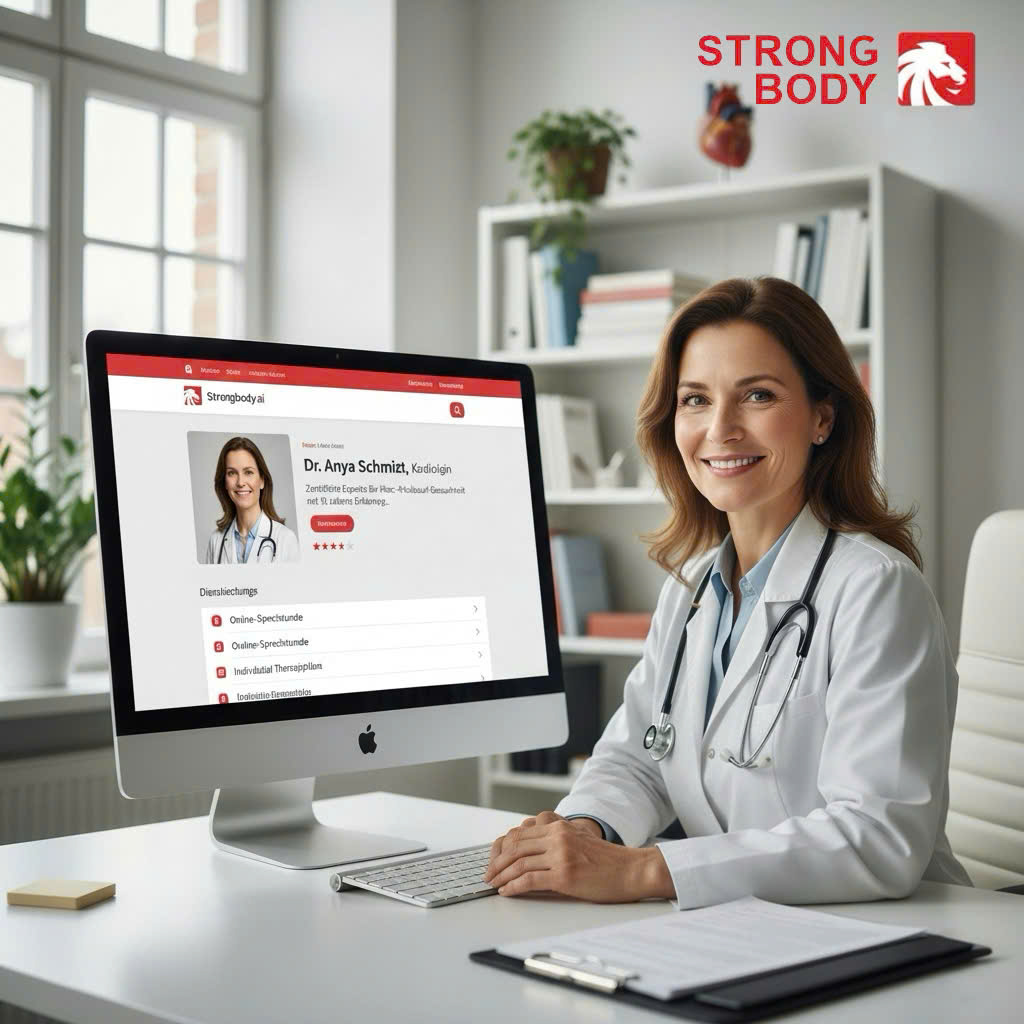
Imagine spending hours building what you think is a perfect healthcare profile on StrongBody AI – impressive credentials, years of experience, competitive pricing – only to watch clients from the US, UK, and EU scroll right past you to book with competitors. You refresh your dashboard daily, hoping for bookings, but the notifications never come. Meanwhile, other healthcare professionals with similar qualifications are fully booked weeks in advance, earning thousands in USD, GBP, and EUR monthly.
What’s the difference? It’s not always about being the best doctor, nutritionist, or yoga instructor. It’s about crafting your expert profile strategically to stand out to clients in the US, UK & EU – the world’s most lucrative healthcare markets.
Why Crafting Your Expert Profile Matters for US, UK & EU Clients
When clients in the US, UK & EU search for healthcare services on StrongBody AI, they’re not just looking for credentials. They’re looking for trust signals, cultural fit, and clear value propositions. Your expert profile is your digital storefront – and in markets where consumers spend three thousand to ten thousand dollars annually on healthcare, crafting your expert profile to meet their expectations can mean the difference between earning five hundred dollars per month and eight thousand dollars per month.
Dr. Tomasz Kowalski, a physical therapist from Gdańsk, learned this the hard way. His initial profile listed his qualifications in dense medical jargon: “Certified in myofascial release techniques, proprioceptive neuromuscular facilitation, and sports rehabilitation protocols.” After three weeks, he had zero bookings from international clients. After crafting his expert profile to speak directly to US, UK & EU audiences – rewriting his bio to say “I help desk workers eliminate chronic back pain without surgery or medication” – he received twelve booking requests in seventy-two hours.
This transformation wasn’t magic. It was strategic profile crafting. Tomasz spent an entire weekend researching how clients in the US, UK & EU search for physical therapy services online. He analyzed competitor profiles, read hundreds of client reviews, and identified patterns in what made certain healthcare professionals stand out. He discovered that American clients wanted immediate, tangible outcomes. British clients valued professional credentials but appreciated plain language explanations. European Union clients from Germany and Netherlands preferred comprehensive, holistic approaches with detailed methodologies.
Armed with these insights, Tomasz completely rebuilt his expert profile. He replaced medical terminology with everyday language. Instead of listing techniques, he described problems solved: lower back pain from sitting, neck tension from computer work, shoulder injuries from gym workouts. He added before-and-after case studies, showing a software engineer who went from daily pain medication to pain-free workdays in six weeks. He included video testimonials from clients in California, London, and Amsterdam, each describing their specific journey from chronic pain to normal function.
The results were immediate and dramatic. Within one month of crafting his expert profile with this client-focused approach, Tomasz had consultations booked with clients from seventeen different countries. His average consultation fee increased from sixty dollars to one hundred fifty dollars because he positioned himself as a specialist solving specific problems rather than a generic physical therapist. He learned that crafting your expert profile isn’t about listing what you can do – it’s about demonstrating what clients will experience and achieve by working with you.
This comprehensive guide will show you exactly how to craft your expert profile to stand out to clients in the US, UK & EU, using proven strategies that convert browsers into paying customers. Every section includes real examples from healthcare professionals who transformed their profiles and their incomes by implementing these specific techniques.
Understanding What US, UK & EU Clients Look for in Expert Profiles
Before crafting your expert profile, you must understand the psychology of clients in the US, UK & EU. These markets share similar healthcare consumer behaviors, but each has unique preferences that directly impact how you should present your services. Ignoring these cultural nuances when crafting your expert profile means losing bookings to competitors who understand their audience better.
US clients expect immediate value, detailed explanations, and outcome-focused language. They ask: “What specific problem will you solve for me, and how quickly?” American healthcare consumers are accustomed to direct marketing, confident claims backed by evidence, and fast results. When crafting your expert profile for US clients, emphasize measurable results, use action-oriented language, and highlight convenience. Americans respond well to time-bound promises like “reduce symptoms within thirty days” or “see improvement after your first session.” They appreciate transparency about pricing, what’s included in services, and clear next steps. They’re also comfortable with bold claims as long as they’re supported by testimonials, data, or credentials.
UK clients value professionalism, evidence-based approaches, and understated confidence. British healthcare consumers are skeptical of overpromising and respond better to modest, factual presentations. When crafting your expert profile for UK audiences, focus on qualifications, peer-reviewed methodologies, and transparent communication styles. British clients appreciate references to NHS protocols, NICE guidelines, or university affiliations. They prefer language that’s professional but not overly salesy. A UK client is more likely to book with someone who says “I work with clients experiencing chronic fatigue to identify underlying causes and develop evidence-based treatment plans” than someone who promises “I’ll cure your chronic fatigue in three weeks guaranteed.” Understatement and professionalism resonate strongly in this market.
EU clients, particularly from Germany, France, Netherlands, and Scandinavia, prioritize holistic approaches, sustainability, and personalized care. They research extensively before booking and often read entire profiles, blog posts, and reviews before making decisions. When crafting your expert profile for EU markets, emphasize comprehensive assessment processes, individualized treatment plans, and long-term wellness strategies. European clients appreciate detailed explanations of your methodology, philosophy, and approach. They’re interested in how you’ll customize treatment to their unique situation rather than applying a one-size-fits-all protocol. They also value environmental consciousness, ethical practices, and evidence that you stay current with the latest research and techniques.
Dr. Katarzyna Lewandowska, the pediatric neurologist from Kraków we discussed earlier, mastered crafting her expert profile for these three markets by creating three slightly different bio versions. She didn’t create entirely separate profiles but rather emphasized different aspects of her practice depending on which market she was targeting in her service descriptions and blog posts.
For US clients, her primary profile headline read: “I diagnose and treat childhood developmental disorders in a single comprehensive consultation – no months-long waiting lists, no endless referrals.” This spoke directly to American frustrations with their healthcare system’s delays and bureaucracy. Her US-focused service descriptions emphasized speed, thoroughness, and the convenience of remote consultations that fit busy family schedules.
For UK clients, her profile emphasized: “Board-certified pediatric neurologist with twelve years NHS experience, now offering evidence-based developmental assessments using NICE-approved protocols.” This immediately established credibility with British parents familiar with NHS standards. She highlighted her medical school credentials from a recognized European university and mentioned publications in peer-reviewed pediatric journals. Her language was professional, measured, and focused on clinical accuracy rather than marketing promises.
For EU clients, particularly those from Germany and Scandinavia, her profile read: “Holistic pediatric neurology consultations combining medical diagnostics with family-centered care plans tailored to your child’s unique development journey.” She emphasized her collaborative approach, explaining how she works with families to understand not just medical symptoms but also social, educational, and emotional factors affecting child development. She detailed her assessment process, which included detailed questionnaires, video analysis of behavior, and comprehensive follow-up protocols.
Same expertise. Same qualifications. Three different ways of crafting her expert profile to stand out to clients in the US, UK & EU. The result? Katarzyna’s booking rate increased by two hundred and forty percent within eight weeks of implementing these targeted profile strategies. More importantly, her client satisfaction scores improved because she was attracting clients whose expectations aligned with her actual approach, leading to better therapeutic relationships and outcomes.
Understanding these market differences is the foundation of crafting your expert profile effectively. Every word you choose, every image you select, every service description you write should reflect an understanding of who your ideal clients are and what matters most to them in their healthcare decision-making process.
The Eight Essential Elements of Crafting Your Expert Profile to Stand Out
When crafting your expert profile on StrongBody AI, these eight elements determine whether clients in the US, UK & EU trust you enough to book. Each element serves a specific psychological function in the client’s decision-making journey, and neglecting any one of them can cost you bookings regardless of how strong the others are.
Element One: A Results-Focused Headline That Speaks Their Language
Your profile headline is the first thing clients see when crafting your expert profile. Generic headlines like “Experienced Nutritionist” or “Certified Yoga Instructor” don’t work because they fail to differentiate you from hundreds of other professionals with identical titles. When crafting your expert profile, your headline must immediately communicate who you help and what outcome you deliver. This isn’t about being clever or creative – it’s about being crystal clear about the transformation you provide.
Weak headlines that don’t stand out when crafting your expert profile include: “Doctor with Fifteen Years Experience,” “Professional Physical Therapist,” “Certified Health Coach,” or “Licensed Nutritionist Available for Consultations.” These headlines tell clients what you are but not what you do for them. They’re static descriptions rather than dynamic promises. A client scrolling through dozens of profiles won’t stop to investigate what makes you different if your headline doesn’t immediately communicate value.
Strong headlines when crafting your expert profile transform this dynamic completely: “I Help Remote Workers Eliminate Migraines Without Medication in Thirty Days,” “Postpartum Recovery Specialist: Get Your Core Strength Back Safely After C-Section,” “Type 2 Diabetes Reversal Expert: Lower Your A1C Naturally in Ninety Days,” or “I Fix Running Injuries That Physical Therapy Couldn’t Solve.” Notice the pattern? Each headline identifies a specific audience, names a specific problem, and implies a specific outcome. A remote worker suffering from chronic migraines immediately recognizes themselves in that first headline. A mother struggling with postpartum core weakness sees the second headline and thinks “that’s exactly what I need.”
The psychology behind effective headlines when crafting your expert profile is straightforward: people don’t want generalists when they have specific problems. They want specialists who clearly understand their unique challenge and have a proven solution. Your headline is your opportunity to raise your hand and say “I see your specific problem, and I have the specific solution you’re looking for.” Make it count.
When crafting your expert profile headline, use this formula: “I help [specific audience] [achieve specific outcome] [through specific method or timeframe].” Test different versions with colleagues or friends from your target markets. Ask them: “Does this headline make you immediately understand what I do and who I help?” If they hesitate or ask for clarification, keep refining until the value proposition is instantly clear.
Element Two: An About Me Section That Builds Trust and Connection
When crafting your expert profile’s “About Me” section, forget the CV-style list of qualifications. Clients in the US, UK & EU want to know three things: Can you understand my problem? Do you have proven solutions? Can I relate to you? Your About Me section is where you transition from being a stranger offering services to becoming a trusted expert who understands their specific situation and has helped others like them achieve the results they want.
The formula for crafting an expert profile “About Me” section that converts follows a specific narrative arc that mirrors the client’s own journey. This isn’t manipulation – it’s effective communication that helps clients quickly determine if you’re the right fit for their needs.
Paragraph one focuses on empathy and problem recognition. Acknowledge the client’s pain point in specific, relatable terms. For example: “I know what it’s like to struggle with chronic insomnia. For three years, I tried everything – prescription medications that left me groggy, sleep tracking apps that only increased my anxiety, meditation programs I couldn’t stick with – nothing worked consistently. That frustration drove me to study sleep science and functional medicine, determined to find real solutions that addressed root causes rather than just masking symptoms.” This opening immediately establishes connection with anyone struggling with similar sleep issues. They think “this person gets it – they’ve been where I am.”
Paragraph two shares your transformation or expertise development. This is where you establish credibility without boring readers with resume details: “After completing my certification in sleep psychology and working with over four hundred clients across twelve countries, I developed a protocol that addresses the root causes of sleep disruption – not just the symptoms. My approach combines circadian rhythm optimization, stress hormone regulation, and personalized sleep hygiene strategies based on your unique lifestyle and biochemistry.” Notice this paragraph weaves in credentials naturally while maintaining focus on client benefit. You’re not listing degrees for their own sake – you’re explaining how your expertise translates into their solution.
Paragraph three provides proof through results. This is where you demonstrate you’ve successfully helped others achieve what the current prospect wants: “My clients typically fall asleep sixty percent faster within two weeks and report feeling genuinely rested for the first time in years. I specialize in helping professionals in high-stress careers reclaim their sleep without dependency on medications. Many of my clients have eliminated sleep medications entirely after working with me, while others who never found relief through traditional approaches finally experience consistent, restorative sleep.” Specific numbers and outcomes matter here. “Sixty percent faster” is more convincing than “fall asleep faster.” “Within two weeks” creates expectation of reasonable timelines. “Without dependency on medications” addresses a specific concern many clients have.
Paragraph four issues a clear call to action that makes the next step obvious and easy: “If you’re ready to finally sleep through the night, book a consultation. We’ll identify what’s disrupting your sleep and create a personalized plan that fits your lifestyle. I work with clients globally through video consultations, making it easy to get expert help regardless of your location.” This removes friction by addressing potential concerns – it’s convenient, it’s personalized, and the process is clear.
This reframing positioned Piotr not as someone eager to perform surgery but as someone who helps clients make informed decisions and potentially avoid surgery altogether – a much more appealing proposition to international clients seeking second opinions. His credentials appeared later in the profile but within the context of how they served client needs. The result was not just more bookings but better-qualified clients who were genuinely good fits for his expertise and approach.
When crafting your expert profile, remember this fundamental truth: clients don’t hire your credentials – they hire your ability to solve their specific problem. Your About Me section should tell a story that positions you as the guide who understands their challenge and has the proven path to their desired outcome. Lead with connection and empathy, demonstrate credibility through results, and make the next step clear and appealing.
Element Three: Professional Visuals That Signal Competence and Trustworthiness
Visual elements are critical when crafting your expert profile to stand out to clients in the US, UK & EU. Your profile photo, cover image, and gallery images send immediate trust signals that operate at a subconscious level before clients even read your content. Research shows that users form first impressions within fifty milliseconds of viewing a website or profile, and these initial impressions significantly influence subsequent information processing and decision-making. When crafting your expert profile, visual presentation isn’t vanity – it’s strategic trust-building.
Your profile photo is the single most important visual element when crafting your expert profile. It appears next to your name in search results, in client messages, and at the top of your profile page. A poor profile photo can undermine even the best-written content, while an excellent photo establishes immediate credibility and approachability. The best profile photos for crafting your expert profile follow specific guidelines that have been validated across thousands of successful healthcare professional profiles.
High resolution is non-negotiable. Your photo should be sharp and clear, showing fine details of your face. Blurry, pixelated, or low-quality images immediately signal unprofessionalism regardless of your actual qualifications. Invest in professional photography if possible, or at minimum use a high-quality smartphone camera with excellent lighting. The difference between a crisp, professional image and a grainy snapshot is the difference between appearing established versus amateur.
Genuine smiling matters more than most professionals realize when crafting your expert profile. Warmth and approachability are crucial for clients in US, UK & EU markets who are choosing healthcare providers online. A closed-mouth professional smile or neutral expression might seem more serious and professional, but data shows smiling photos generate significantly higher booking rates. The smile should reach your eyes, creating the small wrinkles at the corners that signal authentic happiness rather than forced posing. This isn’t about looking silly or unprofessional – it’s about appearing welcoming and trustworthy.
Professional attire appropriate to your field establishes credibility when crafting your expert profile. Doctors and medical professionals should consider wearing white coats or professional business attire. Yoga instructors and wellness coaches might wear appropriate athletic or casual professional clothing. Nutritionists might wear business casual. The key is looking polished and put-together while remaining authentic to your field. Avoid clothing with logos, busy patterns, or anything that dates the photo to a specific era. Classic, simple professional attire ensures your photo remains current for years.
Background choice matters significantly when crafting your expert profile. Plain backgrounds or softly blurred environments work best because they keep focus entirely on you. Cluttered backgrounds with visible personal items, messy spaces, or distracting elements draw attention away from your face and can signal disorganization. Neutral colors like gray, soft blue, or white work well. If shooting in an environment, ensure it’s relevant to your profession – a medical office, a clean consultation room, or a serene wellness space – and use depth-of-field techniques to blur the background slightly.
Eye contact with the camera is essential when crafting your expert profile because it creates connection with viewers. Looking away or at something off-camera creates distance. Direct eye contact signals confidence, honesty, and engagement. This is one of the subtle elements that dramatically impacts how clients perceive you even if they can’t articulate why.
Common mistakes to avoid when crafting your expert profile include selfies that show an extended arm or obvious selfie angle, group photos where clients can’t identify which person you are, photos wearing sunglasses or heavy filters that obscure your face, cluttered or inappropriate backgrounds, poor lighting that casts shadows or washes out features, and outdated photos that don’t match your current appearance. Each of these errors creates immediate doubt about your professionalism and attention to detail.
Cover images deserve strategic consideration when crafting your expert profile. The cover image appears at the top of your profile page and sets the visual tone for your entire presence. Choose images that represent your service category and appeal to your target markets. Nutritionists might use images of fresh, colorful, healthy meals artfully arranged – but avoid stock photos that look generic. Yoga instructors benefit from serene practice environments or well-composed pose demonstrations that showcase skill without feeling performative. Doctors might use clean, modern consultation spaces or medical equipment that signals professionalism and hygiene. Physical therapists could show exercise demonstrations or rehabilitation equipment in clean, professional settings.
Gallery images expand your visual storytelling when crafting your expert profile. Add six to eight high-quality images that build comprehensive trust. Your workspace or consultation environment shows clients where they’ll interact with you, even if consultations are virtual. Certifications and credentials are particularly important for UK and EU clients who value proof of qualifications – photograph your diplomas, certificates, and licenses attractively displayed. Before-and-after client results can be powerful if you have permission and can present them respectfully while maintaining privacy. Images of you working with clients or demonstrating techniques humanize your practice and show your approach in action. Infographics explaining your methodology provide value while demonstrating your expertise and communication skills.
Maria Kowalczyk, a dermatologist from Kraków, experienced the tangible impact of visual optimization when crafting her expert profile. Her initial profile used casual smartphone selfies, a generic stock photo cover image of skincare products, and no gallery images beyond her credentials. Despite excellent qualifications and competitive pricing, her booking rate from international clients was disappointing. She invested in a professional photo session and redesigned her visual presentation completely.
Her new profile photo showed her in a white medical coat, smiling warmly, with a softly blurred medical office background. Her cover image became a professionally shot photo of her actual consultation room – clean, modern, with natural light and visible high-quality medical equipment. Her gallery included close-up shots of her European Board of Dermatology certificate, anonymized before-and-after photos of successful acne and hyperpigmentation treatments, an infographic explaining her three-phase acne treatment protocol, images of her conducting video consultations showing her setup and professionalism, and photos of her skincare product recommendations with brief explanations.
Element Four: Detailed Service Descriptions That Answer Every Question
When crafting your expert profile’s service listings, many healthcare professionals make the critical mistake of vague descriptions that leave clients with unanswered questions. A service listed simply as “Sixty-minute consultation – one hundred twenty dollars” provides almost no information to help clients understand what they’re buying, whether it’s right for their needs, or how it differs from competing services. That’s not enough to stand out to clients in the US, UK & EU who are comparing dozens of providers and need detailed information to make confident booking decisions.
The framework for crafting expert profile service descriptions that convert requires addressing five key questions that every potential client asks themselves: What exactly am I getting? Is this right for my specific situation? What outcomes can I expect? Why should I choose you over competitors? What happens next after I book? Answering these questions comprehensively within your service descriptions dramatically increases booking rates while simultaneously reducing time-consuming back-and-forth messages with potential clients who need clarification.
Service titles must be specific and benefit-focused when crafting your expert profile. Weak titles like “Nutrition Consultation” or “Yoga Session” or “Medical Consultation” are missed opportunities. Strong titles like “Personalized Anti-Inflammatory Meal Plan for Autoimmune Conditions” or “Postpartum Core Recovery Yoga Program” or “Comprehensive Thyroid Disorder Assessment and Treatment Plan” immediately communicate who the service is for and what benefit it provides. The title should make the right clients think “yes, that’s exactly what I need” while helping wrong-fit clients self-select out before wasting anyone’s time.
What’s included sections must detail every component when crafting your expert profile service descriptions. Clients in US, UK & EU markets expect transparency and comprehensive information before making purchase decisions. A strong “What’s Included” section might read: “This comprehensive ninety-minute consultation includes: Complete dietary assessment and health history review covering your medical history, current symptoms, previous treatment attempts, and lifestyle factors. Personalized macro-nutrient analysis based on your specific autoimmune condition, calculating optimal protein, carbohydrate, and fat ratios for your metabolism and therapeutic needs. Thirty-day meal plan with sixty-plus recipes tailored to your food preferences, cultural background, and practical cooking abilities. Detailed shopping list organized by store section with specific brands and alternatives. Meal prep guide with time-saving strategies for batch cooking and food storage. Two weeks of email support for questions about implementation, ingredient substitutions, or troubleshooting challenges. Follow-up check-in call of twenty minutes scheduled after fourteen days to assess progress and make adjustments.”
This level of detail when crafting your expert profile accomplishes multiple goals simultaneously. It justifies your pricing by demonstrating substantial value. It sets clear expectations so clients know exactly what they’re receiving. It reduces post-booking questions and complaints. It differentiates you from competitors with vague descriptions. It demonstrates your systematic, professional approach. Clients can evaluate whether this package truly addresses their needs before booking rather than discovering mismatched expectations afterward.
Notice this section includes specific numbers, realistic timeframes, and important caveats when crafting your expert profile. You’re not promising miraculous cures or overnight transformations. You’re providing evidence-based expectations that build trust with sophisticated clients while protecting yourself from unrealistic demands. Clients in US, UK & EU markets appreciate honesty and specificity over exaggerated promises.
When crafting your expert profile with this level of service description detail, clients in the US, UK & EU can make informed decisions without needing to message you first. This reduces friction in the booking process and increases conversion rates. It also attracts better-qualified clients who understand what they’re purchasing and arrive prepared to implement your recommendations, leading to better outcomes and more positive reviews.
Element Five: Client Testimonials and Success Stories That Build Social Proof
Social proof is essential when crafting your expert profile to stand out because clients in the US, UK & EU trust peer reviews more than self-promotion. No matter how impressive your credentials or how compelling your service descriptions, potential clients want to hear from others like them who have already experienced your services and achieved results. Testimonials transform you from an unknown provider making claims to a trusted expert with proven results.
The challenge when crafting your expert profile, especially when starting on StrongBody AI, is collecting high-quality testimonials. Many healthcare professionals hesitate to ask satisfied clients for reviews, feeling it’s pushy or unprofessional. This mindset costs bookings. The reality is that happy clients are usually willing to share their positive experiences when asked directly and made it easy to do so.
How to collect testimonials systematically when building your expert profile starts with timing and positioning. After successful consultations where clients express satisfaction or report positive results, send a simple, direct message within twenty-four to forty-eight hours while their positive experience is fresh: “I’m so glad our session helped you address your sleep issues. Your progress has been excellent. Would you be willing to share a brief testimonial about your experience working with me? It really helps other clients understand how I can help them with similar challenges. Just a few sentences about what you were struggling with before we worked together and what has changed since implementing the strategies we discussed would be perfect.”
This testimonial works because it’s specific about the problem, the approach, and the measurable results. It includes authentic emotional language that resonates with others suffering similarly. It mentions the client’s location, adding social proof that the provider successfully works with international clients. It feels genuine rather than scripted.
Contrast this with weak testimonials that don’t help when crafting your expert profile: “Dr. Kowalski is great. I recommend him.” Or “Very professional and helpful.” These generic statements provide no useful information to potential clients and might even seem fabricated because they’re so vague. Always ask clients for specific details when requesting testimonials.
Create detailed case studies as an alternative to traditional testimonials when crafting your expert profile. With client permission, write anonymized case studies: “Client A, a forty-two-year-old software engineer from Seattle, came to me with chronic lower back pain from sitting. After assessment, I designed a specific corrective exercise protocol addressing his hip flexor tightness and core weakness. Within six weeks of following the program, his pain reduced from a daily eight out of ten to occasional two out of ten, and he completed his first half-marathon pain-free.” Case studies demonstrate your problem-solving approach and results even without direct quotes.
Display testimonials strategically throughout your profile when crafting your expert profile. Don’t just dump them all at the bottom. Feature your strongest testimonial prominently near the top of your About Me section. Include relevant testimonials within specific service descriptions. If you offer a postpartum recovery program, embed testimonials from mothers who completed it successfully right within that service listing. This contextual placement helps clients envision themselves achieving similar results from that specific service.
Update testimonials regularly when crafting your expert profile. As you collect new reviews, rotate them to keep content fresh. Feature recent testimonials prominently to show you’re actively working with clients and consistently delivering results. Archive older testimonials rather than deleting them – they still provide value as accumulated social proof even if they’re not featured as prominently.
Element Six: Strategic Keyword Integration for Search Visibility
When crafting your expert profile on StrongBody AI, understanding how clients in the US, UK & EU search for services is crucial for ensuring your profile appears in relevant search results. Strategic keyword placement improves your profile’s discoverability without making your content sound robotic or stuffed with awkward phrases. The goal when crafting your expert profile is natural integration of terms that match how your ideal clients think about and search for solutions to their health challenges.
Primary keywords to include when crafting your expert profile fall into several categories. Your specialty or professional title forms the foundation: “pediatric neurologist,” “sports nutritionist,” “prenatal yoga instructor,” “functional medicine doctor,” “pelvic floor physical therapist.” These terms should appear in your profile headline, early in your About Me section, in your professional title field, and in relevant service descriptions.
Problems you solve represent the second critical keyword category when crafting your expert profile. Think about how clients describe their challenges, not how medical professionals do. Clients search for “chronic pain,” not “persistent nociceptive discomfort.” They look for help with “hormone imbalance,” not “endocrine dysfunction.” They want solutions for “anxiety management,” not “anxiolytic intervention strategies.” When crafting your expert profile, use patient-friendly language: “chronic pain,” “hormone imbalance,” “anxiety management,” “sleep problems,” “digestive issues,” “weight loss resistance,” “postpartum recovery,” “sports injuries,” “autoimmune symptoms.”
Treatment approaches and methodologies help you appear in searches from clients looking for specific types of care when crafting your expert profile. Include terms like “functional medicine,” “evidence-based,” “holistic approach,” “integrative medicine,” “conservative treatment,” “non-surgical options,” “natural solutions,” “medication-free approaches,” “science-backed protocols.”
Where to place keywords strategically when crafting your expert profile requires balance between optimization and readability. Your profile headline should include one to two primary keywords naturally integrated. For example: “Functional Medicine Practitioner Specializing in Thyroid Disorders for Women Over Forty” includes specialty, approach, condition, and demographic keywords naturally.
Your About Me section provides the richest opportunity for keyword integration when crafting your expert profile. Within the first two hundred words, naturally incorporate your primary specialty, main problems you solve, and target demographic. Continue weaving relevant keywords throughout the narrative without forcing them. Read your content aloud – if keyword placement sounds awkward or repetitive, revise until it flows naturally while maintaining search optimization.
Service titles and descriptions are prime keyword real estate when crafting your expert profile. Each service title should include specific keywords that potential clients might search: “Comprehensive Thyroid Assessment for Hashimoto’s Disease,” “Sports Injury Rehabilitation for Runners,” “Postpartum Diastasis Recti Recovery Program.” Service descriptions should naturally include related keywords and phrases that clients searching for those specific solutions would use.
Blog post titles and content provide ongoing keyword optimization opportunities when crafting your expert profile. Each blog post targets specific search terms related to your expertise. A nutritionist might write: “How to Reduce Inflammation Through Diet: A Science-Based Guide for Autoimmune Conditions.” This title includes multiple searchable phrases: reduce inflammation, inflammation diet, science-based nutrition, autoimmune conditions. The content elaborates using related keywords naturally throughout.
Skills and specialization tags offered by the platform should be completely filled out when crafting your expert profile. Don’t leave these sections blank or partially completed. Every relevant tag is another search pathway for potential clients to discover you. If the platform allows twenty skill tags and you’ve only added five, you’re missing fifteen opportunities to appear in filtered searches..
Avoid keyword stuffing when crafting your expert profile. This outdated practice involves cramming keywords awkwardly and repeatedly into content: “As a nutritionist, I provide nutritionist services including nutrition counseling and nutritional therapy for nutrition clients seeking nutritionist expertise.” This approach actually hurts your visibility because platform algorithms recognize and penalize obvious keyword stuffing, and human readers find it off-putting and unprofessional.
Research competitor profiles when crafting your expert profile to identify keyword opportunities. Search for services similar to yours on StrongBody AI and analyze top-performing profiles. What terms do they use? How do they describe their services? What keywords appear in their headlines and descriptions? You’re not copying their content but rather identifying effective language and positioning strategies that resonate with your shared target market.
Element Seven: Pricing Strategy That Positions You Correctly in the Market
When crafting your expert profile, pricing is a positioning tool that communicates value, attracts specific client segments, and directly impacts how US, UK & EU clients perceive your expertise. Many healthcare professionals struggle with pricing on international platforms, either undercharging significantly and attracting price-focused clients who may not value their expertise, or overcharging without adequate justification and receiving no bookings at all.
Research shows distinct pricing psychology across US, UK & EU markets when crafting your expert profile. US clients expect to pay one hundred to three hundred dollars for specialized consultations with credentialed experts. They’re accustomed to high healthcare costs and generally don’t balk at premium pricing if they perceive substantial value. American clients often equate higher prices with higher quality, assuming expensive providers must be more qualified or effective. When crafting your expert profile for US markets, don’t underprice your services thinking it will attract more clients – it often has the opposite effect, making you appear less experienced or qualified than competitors.
UK clients typically pay eighty to two hundred British pounds for private healthcare consultations. They’re more price-conscious than Americans but willing to pay for genuine expertise and convenience. British clients appreciate transparent pricing without hidden fees and tend to research thoroughly before booking. When crafting your expert profile for UK markets, justify your pricing by emphasizing credentials, experience, and comprehensive service inclusions. UK clients want to understand exactly what they’re paying for.
EU clients vary significantly by country when crafting your expert profile. Germanic and Scandinavian countries have higher price tolerance and expect premium quality at premium prices. Southern and Eastern European markets are generally more price-sensitive but still willing to pay for specialized expertise they can’t access locally. French clients expect detailed, comprehensive services that justify pricing. When crafting your expert profile for diverse EU markets, consider offering tiered pricing options that accommodate different budgets while maintaining your premium positioning.
This structure when crafting your expert profile serves multiple strategic purposes. Most clients select the middle option, which is exactly where you want them – it’s profitable while delivering substantial value. Budget-focused clients can access your expertise without feeling excluded. High-value clients who want maximum support have that option. The pricing spread also makes your standard rate appear more reasonable when positioned between lower and higher options.
Avoid these common pricing mistakes when crafting your expert profile. Charging the same rate as local competitors in your home country ignores the purchasing power and price expectations of international clients in developed markets. A consultation that costs fifty dollars locally might be priced at one hundred fifty dollars for international clients who have significantly higher incomes and healthcare spending norms. This isn’t exploitation – it’s market-appropriate pricing that reflects the value you’re delivering to clients who can afford it.
Another mistake when crafting your expert profile is failing to justify premium pricing with clear value propositions. If you charge two hundred dollars per consultation, clients need to understand why. What makes you worth double or triple the cost of alternatives? Your service descriptions, credentials, testimonials, and outcomes must support your pricing. Premium prices require premium presentation throughout your profile.
Package pricing works effectively when crafting your expert profile for services that benefit from multiple sessions. Instead of just offering single consultations, create packages: “Three-month metabolic reset program: five consultations plus email support – six hundred dollars.” Packages increase average transaction value, commit clients to a longer engagement period that improves outcomes, and provide better value per session than purchasing individually. Clients perceive packages as investments in comprehensive solutions rather than one-off purchases.
Introductory pricing can build your client base when crafting your expert profile initially, but use it strategically. Offer a limited number of discounted introductory consultations to establish reviews and testimonials, but set an end date. “Introductory rate of ninety dollars for first consultation for my first twenty international clients” creates urgency while building social proof. Once you’ve established credibility, raise prices to market rates. Existing clients who received introductory pricing often become long-term clients at your standard rates because they’ve experienced your value firsthand.
Dynamic pricing based on demand can optimize revenue when crafting your expert profile. If your calendar fills weeks in advance, your pricing is too low. Gradually increase rates until demand and availability balance appropriately. If you have excessive availability and few bookings, either your pricing is too high relative to your profile’s perceived value, or your profile needs optimization in other areas. Don’t immediately drop prices – first improve profile elements that build trust and demonstrate value.
Comparable pricing research matters when crafting your expert profile. Search StrongBody AI for providers with similar specialties, experience levels, and target markets. What are top performers charging? How do they justify their pricing? What’s included in their services at various price points? You’re not copying their prices but rather understanding the market landscape and positioning yourself appropriately within it. If most similar providers charge one hundred to one hundred fifty dollars for sixty-minute consultations, pricing yours at three hundred dollars requires exceptionally strong justification through credentials, unique specializations, or proven results that others can’t match.
Element Eight: Regular Content Creation Through Blog Posts
When crafting your expert profile for maximum visibility and credibility on StrongBody AI, blog posts are not optional – they’re essential. Regular content creation establishes you as a thought leader, improves your search visibility both within the platform and through external search engines like Google, provides value to potential clients before they book, and demonstrates your communication style and depth of knowledge. The most successful professionals on StrongBody AI publish blog content consistently, and their profiles reflect this commitment through higher booking rates and premium pricing power.
Blog posts serve multiple strategic purposes when crafting your expert profile. They provide searchable content that helps potential clients discover you through specific health-related queries. Someone searching “how to reduce inflammation naturally” might find your blog post on anti-inflammatory nutrition, read your comprehensive advice, and book a consultation to get personalized guidance. Blog content also builds trust by demonstrating expertise before clients invest in paid services. A detailed, helpful blog post proves you understand the topic deeply and can communicate complex information clearly.
Content strategy when crafting your expert profile should balance evergreen topics that remain relevant indefinitely with timely content addressing current health trends or seasonal issues. Evergreen posts might include “Understanding Thyroid Function: A Comprehensive Guide,” “Five Evidence-Based Strategies for Managing Chronic Pain,” or “How to Interpret Your Hormone Test Results.” These posts continue attracting readers and potential clients for months or years after publication.
Timely content when crafting your expert profile might address seasonal issues: “Managing Seasonal Affective Disorder During Winter Months,” “Allergy Season Survival Guide for Natural Solutions,” or “Maintaining Fitness Routines During Holiday Travel.” Current trends provide opportunities too: if a new study about intermittent fasting makes headlines, publish your expert analysis. When a celebrity discusses their autoimmune diagnosis publicly, write about that condition from your professional perspective.
Blog post frequency matters when crafting your expert profile. Aim for at least two to four substantial posts monthly minimum. This demonstrates active engagement, provides regular fresh content for returning visitors, and improves platform algorithms that favor active profiles. Consistency matters more than frequency – publishing one excellent post weekly is better than publishing four posts one month then nothing for three months.
Post length should vary based on topic complexity when crafting your expert profile, but generally longer, comprehensive posts perform better than brief superficial content. Aim for eight hundred to two thousand words for most topics. This length allows you to explore subjects thoroughly, include multiple keywords naturally, demonstrate genuine expertise, and provide substantial value that justifies the reader’s time investment. Shorter posts of four hundred to six hundred words work for simpler topics or when addressing a single focused question.
Content topics when crafting your expert profile should directly address questions and concerns your ideal clients have. What do clients ask during consultations? What misconceptions do you regularly correct? What information do clients wish they’d known earlier? These questions provide endless blog post topics. Common mistakes, how-to guides, myth-busting posts, explanations of complex topics, case study analyses, and comparison posts all perform well.
Avoid overly promotional blog content when crafting your expert profile. While blog posts should ultimately support your business, they shouldn’t read like advertisements. The primary purpose is providing genuine value and establishing expertise. A post titled “Why You Should Book My Nutrition Services” will perform poorly. A post titled “How to Know If You Need Professional Nutrition Guidance: Five Signs Your Diet Needs Expert Input” provides value while naturally leading qualified readers to consider your services.
Include clear calls-to-action at the end of blog posts when crafting your expert profile, but make them relevant and soft. After a detailed post about managing thyroid disorders, a natural call-to-action might be: “If you’re struggling to manage your thyroid condition and want personalized guidance, I offer comprehensive thyroid assessments. Learn more about my thyroid consultation services or book a discovery call to discuss your specific situation.” This invites interested readers to take the next step without being pushy.
Optimize blog posts for search engines when crafting your expert profile by including relevant keywords naturally throughout the content, especially in the title, first paragraph, headers, and conclusion. Write compelling titles that include keywords while promising clear value: “How to Lower Blood Pressure Naturally: Seven Evidence-Based Strategies” is better than “Blood Pressure Information.” Use descriptive alt-text for any images included in posts. Link to your service pages where relevant, helping both readers and search algorithms understand the connection between your content and services.
Update older posts periodically when crafting your expert profile to maintain accuracy and relevance. If you published a post about thyroid treatment two years ago and new research has emerged, update the post with current information and add a note about when it was last revised. This shows you stay current and care about providing accurate information. Updated posts also perform better in search algorithms that favor fresh content.
Each post targeted specific search terms women in US, UK & EU markets use when seeking information about these conditions. She wrote “Understanding PCOS: A Complete Guide to Polycystic Ovary Syndrome,” “Natural Treatment Options for Menopause Symptoms: What Actually Works,” “Why Am I So Tired? Understanding Adrenal Fatigue and Hormone Imbalances,” and dozens more. Each post provided genuine value while naturally leading interested readers to her consultation services.
The results when crafting her expert profile through consistent blogging were extraordinary. Her profile views increased from two hundred monthly to over five thousand monthly within six months. Her blog posts ranked in Google search results for multiple competitive health terms, driving traffic from outside the StrongBody AI platform. Clients regularly mentioned in booking messages that they’d read multiple blog posts before deciding to book, feeling like they already knew and trusted her. Her booking rate was seventy-eight percent higher than the platform average for functional medicine practitioners, and she charged premium rates because her content had established her as an authority.
Your Turn: The World Needs Your Indian Wellness Expertise
You possess knowledge the world desperately needs. Wisdom passed down through generations. Training that took years to master. Understanding of holistic health that Western medicine fundamentally lacks. Cultural authenticity that cannot be replicated. Proven approaches that have helped millions across millennia.
The global wellness revolution is happening right now. Three hundred million yoga practitioners worldwide are seeking authentic guidance. Millions suffer from chronic conditions where Ayurveda, Yoga therapy, and Naturopathy excel. Premium markets are willing to pay 8-12x your local rates for genuine Indian wellness expertise. And technology finally exists to connect you with them effortlessly.
The painful truth is that while you practice in your local area serving a handful of clients at compressed prices, thousands of people worldwide are desperately searching for exactly what you offer – and settling for inferior alternatives because they can’t find you. They need your help. They’re willing to pay for it. But the traditional barriers of geography, language, payments, marketing, and technology have kept you separated.
Until now.
StrongBody AI removes every barrier between your expertise and the global clients waiting for your guidance. The platform provides everything you need: AI matching to connect you with ideal clients worldwide, translation supporting 194 languages, instant payment processing in 50+ currencies, the Request and Offer System for premium
personalized services, blogging tools to build authority, passive income through your integrated shop, proactive client acquisition via Active Messaging, data-driven optimization through comprehensive analytics, complete compliance and security handling, and 24/7 support to guide your success.
This isn’t just another online platform. This is the bridge between 5,000 years of Indian wellness wisdom and billions of people worldwide who desperately need what you know. The demand is proven. The trust is established. The infrastructure is ready. The only question is: Will you step forward?
Why Indian Wellness Practitioners Have Unique Advantages
Here’s what makes your position particularly powerful: You’re not just another wellness provider. You carry authentic lineage connection to traditions the world reveres. When you teach yoga, you’re sharing knowledge from the land where yoga was born. When you practice Ayurveda, you’re applying wisdom refined over 5,000 years in its original cultural context. When you guide meditation or pranayama, you offer techniques that Western practitioners learned secondhand from teachers like you.
This authenticity creates premium positioning. A yoga teacher in California who did a 200-hour training charges $75-100 per session. You, with traditional training and years of practice in India, can command $120-150 for the same time – because clients recognize the difference between surface-level instruction and deep traditional knowledge.
The cultural credibility alone differentiates you. When you explain doshas, you’re not repeating what you read in a book – you understand them intuitively from growing up in a culture where this wisdom is woven into daily life. When you discuss Ayurvedic dietary principles, you’re sharing knowledge passed down through your family and community. This depth cannot be faked or quickly acquired through weekend workshops.
Additionally, your cost of living advantage means you can offer competitive pricing while still earning premium income by Indian standards. You can charge $150 for a consultation that costs you ₹12,500 – which is premium in India but reasonable in Western markets. Your client in New York pays less than local alternatives while you earn far more than local practice. Both sides win.
The timing couldn’t be better. Western medicine’s limitations with chronic disease are increasingly obvious. Pharmaceutical side effects are becoming unacceptable to educated consumers. The wellness market is exploding globally. Interest in authentic traditional medicine is at an all-time high. The world is ready for what you offer. The question is whether you’re ready to reach them.
What You Need to Succeed
Be honest with yourself: Are you ready for this? Building a successful global practice through StrongBody AI requires certain qualities and commitments.
You need genuine expertise and proper credentials in your field. The world wants authentic Indian wellness knowledge, not superficial understanding. Your training, certifications, and years of practice matter. If you’re still learning basics, continue developing mastery before expanding globally. But if you’re genuinely skilled and helping people successfully in your local practice, you’re ready.
You need commitment to quality and ethical practice. You’ll be representing Indian wellness traditions to the world. Delivering results with integrity builds the reputation that creates sustainable success. Cutting corners or overpromising undermines not just your practice but the credibility of traditional medicine globally.
You need willingness to communicate regularly with clients across time zones. Global practice means flexibility. A client in California is 12.5 hours behind India. You might conduct video consultations in early morning or late evening. You need responsiveness to messages, even if that means checking your platform notifications twice daily. This isn’t overwhelming, but it requires adjustment from seeing local clients only during standard business hours.
You need patience during the building phase. The first international client often takes 2-4 weeks. Building to consistent full-time income takes 3-6 months of active effort. This isn’t passive income from day one – you’re building a business. But if you commit to the process, the results compound over time.
You need openness to learning platform tools and optimizing your approach. Successful practitioners use analytics to understand what works, test different service offerings and pricing, engage with Active Messaging, publish blog content regularly, and continuously improve based on feedback. You don’t need technical expertise, but you do need willingness to learn.
If you have these qualities, success is not just possible – it’s probable. The platform provides the infrastructure, tools, and client connections. You provide the expertise, care, and commitment. Together, they create a thriving global practice.
Your Action Plan: Getting Started on StrongBody AI
Step 1: Sign Up for Your Seller Account
Visit strongbody.ai, click “Sign Up,” and select “Seller.” Enter your email, create a secure password, and add a referral code (optional). Check your email to get OTP Code and verify account to activate.
Step 2: Complete Your Professional Profile
At the top menu of StrongBody AI Homepage, in “Seller Dashboard”, go to “Profile Settings” and fill in:
- Personal Information: Shop name, profession (e.g., doctor, nutritionist), category (e.g., wellness, medical), country, shop link, “About” section, CV, and payment methods (e.g., Stripe).
- Experience & Education: Add skills, education, certifications (e.g., medical degree, yoga certificate), and also a gallery with a professional headshot and relevant images.
Step 3: Post The First Listing To Sell It On StrongBody AI
Still in the “Seller Dashboard” page, go to “Shop Management” > “My Services/My Products” > “Add New Service/Product.” Enter the name, category, and benefits. Upload a high-quality cover/thumbnail image. Click “Create Your Service/Product” on the right. Tips: Target your audience, highlight problems solved, and show results
Step 4: Publish Your First Blog Post
In “My Blogs,” click “Add New Blog.” Enter a title (e.g., “5 Tips for Better Sleep”), select a category, upload a thumbnail, write your content, and click “Publish.”
Step 5: Set Up Your Personal Store
In “Shop Management,” customize your store to offer services and products that align with client wellness needs.
Step 6: Respond to Buyer Requests
Go to “Requests” in the Seller Dashboard. Browse client inquiries and submit tailored offers for jobs matching your skills.
Step 7: Share Your Shop
Share your unique shop link on social media (e.g., LinkedIn, Instagram). Post about your journey and create engaging content about your services.
Step 8: Attend the Shop to Reply to Customers
Check your shop regularly for messages. Respond promptly to client inquiries using StrongBody’s chat feature for seamless communication.
Launch Your Global Business
Register at strongbody.ai, follow these steps, and start connecting with clients worldwide in just 5 minutes. Your expertise deserves a global audience—get started today!
The world is waiting for you. Your future clients are searching for you right now. Connect with them today on StrongBody AI.
#IndianWellness #AyurvedaGlobal #YogaTherapy #GlobalWellness #WellnessPractitioner #StrongBodyAI #AuthenticAyurveda #TraditionalMedicine #WellnessEntrepreneur #HolisticHealth
StrongBody AI Empowers Practitioners to Master the Lucrative Hybrid Healthcare Model
Success in the global market requires shifting from a generic provider to a solution-oriented specialist. StrongBody AI serves as the engine for this evolution, helping professionals from regions like Poland or India adapt their “digital storefront” to the specific psychological triggers of US, UK, and EU clients. By moving beyond dense medical jargon and focusing on tangible outcomes—such as eliminating chronic pain or reversing diabetes—practitioners can justify premium pricing. This hybrid approach ensures that medical expertise is translated into a clear value proposition that high-income international markets are eager to book.
Administrative Friction is Eliminated Through Seamless StrongBody AI Visual Trust
A professional profile is only as strong as its first impression, and StrongBody AI removes the friction of building trust through its structured visual framework. By utilizing high-resolution imagery, approachable headshots, and detailed galleries of certifications, experts can signal competence within milliseconds. The platform’s layout ensures that critical trust signals—like professional attire and clean consultation environments—are front and center. This visual professionalism, combined with an empathetic “About Me” section, bridges the gap between a distant online stranger and a trusted global healthcare partner.
Continuity of Care is Enhanced via the StrongBody AI Personal Care Team Feature
The most successful experts on the platform don’t just provide one-off sessions; they build long-term authority through detailed service descriptions and social proof. The StrongBody AI Personal Care Team feature allows practitioners to present comprehensive “What’s Included” packages that answer every potential client question before the first message is even sent. By integrating specific client testimonials and success stories, experts build the evidence-based credibility that UK and EU clients demand. This proactive model fosters lasting therapeutic relationships, significantly increasing both booking rates and overall client satisfaction.
