The digital healthcare market in India is currently undergoing an intense transformation, with the value of the e-health and telemedicine sector estimated at approximately USD 10-12 billion according to the latest market reports. This dynamic growth stems from the surging demand for remote healthcare services post-pandemic, as well as national strategies like the Ayushman Bharat Digital Mission (ABDM) promoting digitalization, aiming for widespread e-health adoption across medical facilities. In the context of a rapidly evolving demographic where the elderly population is growing significantly, India’s healthcare system faces a major resource challenge—the doctor-to-population ratio remains around 0.7–0.9 per 1,000 people, below the WHO recommendation. Total healthcare expenditure is rising (aiming for 2.5% of GDP by 2025), with a significant portion of government and private investment directed toward digitalization, enabling hospitals and clinics to transition to connected online models. These factors create a solid foundation for Artificial Intelligence to become an indispensable tool in increasing service efficiency and relieving medical staff.
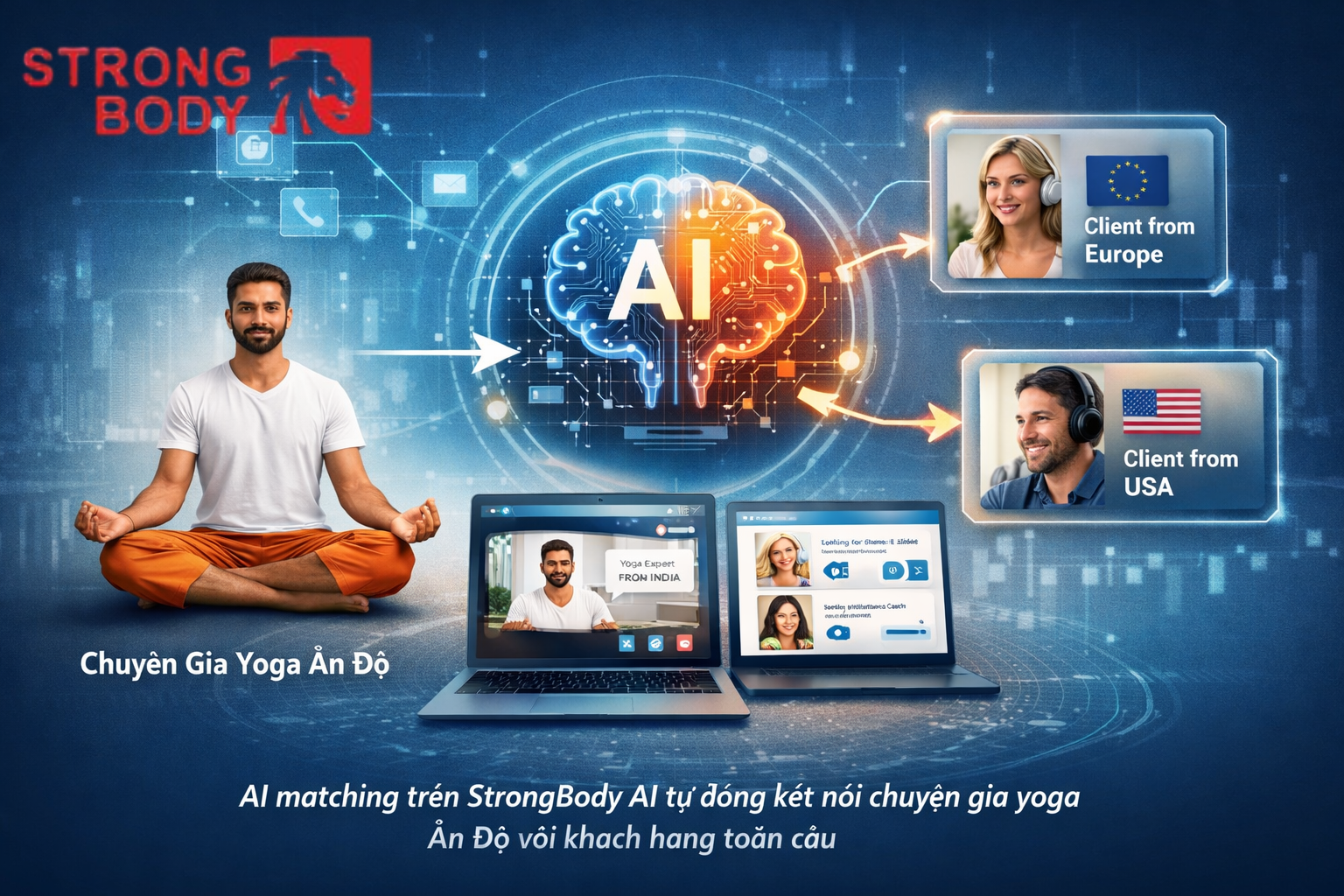
The transition to digital healthcare opens an opportunity for health specialists in India to expand their activities beyond local borders. Global platforms such as StrongBody AI, present in India and connecting tens of millions of users worldwide, play a key role in linking doctors, pharmacists, and psychology specialists with those in need of help. The platform allows for the creation of an individual shop profile for only USD 15 per month, publishing remote or stationary services, and reaching international clients without the need for large marketing investments. AI smart matching automatically sends notifications about relevant services to users, facilitating Indian specialists’ active inclusion in the global healthcare ecosystem.
How is AI Changing Diagnostics and Treatment in India?
Artificial Intelligence is gradually becoming an irreplaceable support in diagnostic imaging and medical data management in India. With millions of digital prescriptions and health IDs being generated, the system is ready for AI to analyze large datasets, predict chronic disease risks, and rapidly support clinical decisions. Studies indicate that AI can reduce diagnostic errors by up to 30% in medical imaging, particularly in cardiovascular diseases and oncology. In major hubs like Bengaluru, Mumbai, or Delhi, AI supports the reading of X-rays and MRIs, allowing doctors to handle more cases while maintaining high precision. This is particularly important for the growing senior population, where remote monitoring of chronic diseases is a priority.
StrongBody AI leverages the power of AI to increase the efficiency of diagnostics and remote consultations. Specialists on the platform can publish advanced consultation services, combining them with sharing health-supportive products, such as local dietary supplements. The Personal Care Team feature enables the building of a personalized care team where AI automatically connects specialists with a user’s specific needs. A general physician in India can monitor dozens of chronic patients through a multilingual chat with voice translation, send detailed offers, and receive secure escrow payments via Stripe or PayPal. This makes the diagnostic process faster and more personalized, reducing the risk of complications and optimizing long-term treatment costs.
Dr. Ananya Sharma, a dermatologist from Mumbai with over 12 years of experience, initially struggled with an overwhelming number of patients in her clinic, especially during peak seasons for skin conditions. She often felt frustrated when she couldn’t react quickly to changes in the condition of elderly patients who avoided visits due to travel difficulties in the city. In 2025, she joined StrongBody AI, creating a profile with two online dermatology consultation services and sharing local protective creams. Thanks to AI matching, she quickly received inquiries from users in India and the UK, building a Personal Care Team for a patient with atopic dermatitis. Through MultiMe Chat with voice translation, she conducted weekly consultations, tracked progress based on sent photos, and sent offers. After five months, her income increased by 35%, and her stress decreased significantly due to working remotely in the evenings. This case analysis shows that AI not only increases efficiency but also allows specialists to maintain a work-life balance, fitting into the growth of telemedicine in India.
Personalization of Healthcare – The Key Advantage of AI
Artificial Intelligence opens possibilities for deeply personalized healthcare that the traditional system cannot provide on a large scale. In India, where cases of cardiovascular diseases and diabetes are rising, AI analyzes data from wearable devices and medical history, proposing individual nutritional, physical, or psychological recommendations. This allows for predicting complications at an early stage, limiting hospitalizations, and lowering costs for patients and the system. Specialists can monitor progress in real-time, adjusting treatment plans without frequent in-person visits.
StrongBody AI strengthens personalization through the Personal Care Team, where users in India select specialists from various fields—from nutrition to psychology and rehabilitation—for long-term support. AI automatically sends notifications and matches based on interests, building trusted relationships. A specialist can monitor progress through MultiMe Chat, send voice messages translated into the recipient’s language, share products, and receive accepted offers. The service ceases to be a one-time consultation and becomes a continuous care journey, improving the quality of life for users and providing specialists with a stable income.
Mr. Rajesh Kumar, a clinical nutritionist from Hyderabad, for years felt powerless toward patients with type 2 diabetes who did not follow recommendations due to a lack of regular contact. He often woke up at night thinking about possible complications in his charges. In 2025, he registered on StrongBody AI, publishing nutritional consultation services and local supplements. Thanks to AI, he received inquiries from a family in Delhi with a child suffering from diabetes. Through voice chat and detailed offers, he prepared a six-month plan, monitoring progress with photos and reports. After a period, the patient reported significant improvement in glycemic control, and Rajesh withdrew funds quickly and without hidden fees. This case illustrates how AI solves logistical problems and builds long-term trust, perfectly fitting the digital prescription market in India.
What Happens if Health Specialists in India Stay Outside the AI Wave?
A delay in implementing Artificial Intelligence may cause a serious loss of competitive advantage for health specialists in India in the dynamically developing digital healthcare market. With a low density of medical personnel—estimated around 0.9 doctors per 1,000 people in 2025—and the growing demand for remote services, doctors relying solely on traditional methods risk a gradual reduction in patient numbers. The telemedicine market in India continues to grow, as confirmed by forecasts from companies like Apollo Telehealth, which expect continuous sales growth through 2026. Only those specialists who actively join digital platforms can maintain a steady flow of patients and expand their activities beyond local borders. A physician in Pune who does not use AI tools or teleconsultations may notice a real decline in visits, while colleagues present on digital platforms reach international patients, offering consultations at convenient hours using intelligent matching.
Lack of digitalization means not only less visibility in the eyes of patients but also the loss of opportunities to optimize one’s own working time and build a stable additional income. In conditions where queues for specialists remain long and patients increasingly seek quick online solutions—especially after the pandemic experience—specialists without a digital presence lose out to those who offer flexibility. According to studies from the Digital Health Authority in 2025, AI tools are already used in 13.2% of hospitals (compared to 6.5% the previous year), showing accelerating technology adoption. Individual doctors and those in smaller clinics who do not take similar steps risk marginalization. In the long run, this may mean not only lower earnings but also difficulty in keeping knowledge and competencies up to date, as AI increasingly supports imaging diagnostics, complication prediction, and treatment plan personalization.
StrongBody AI effectively minimizes these risks thanks to an exceptionally user-friendly interface that does not require advanced technical knowledge. A specialist simply completes a profile with an authentic photo, certificates, and experience description, and then publishes at least two online services and one offline or hybrid service to start receiving inquiries from users worldwide in a short time. The Active Message function allows for initiating contact with potential patients selected by AI matching based on specializations and buyer interests, providing a real chance to actively acquire clients without expensive advertising campaigns. The escrow mechanism (payments held until service confirmation) guarantees safety for both the specialist and the patient—money goes to the seller only after acceptance by the buyer or after 15 days without a complaint. Skipping such an opportunity limits activity to the local market, where competition is very strong, while making it difficult to compete with those specialists who have already built a strong personal brand in the international arena.
In practice, a lack of participation in digital ecosystems means a gradual deepening of income disparities between specialists. Those who stay outside platforms lose access to patients ready to pay more for the convenience of remote consultations, flexible dates, and an individual approach—especially from abroad, where rates are often higher than in the Indian public system. For example, a family doctor or internist in a smaller city who does not offer teleconsultations may watch their patients choose colleagues from large hubs or even specialists from other countries via global marketplaces. In 2026, when AI adoption in hospitals reaches 13–15%, and patients get used to quick online answers, a specialist without a digital presence risks not only losing part of their private practice but also weakening their professional position. Patients increasingly expect the doctor to be available digitally—lack of this option is perceived as a lack of modernity.
At the same time, a delay in digitalization carries emotional and professional risks. Many doctors who have worked in a traditional model for years feel frustration and burnout due to overloaded schedules, long queues, and limited real impact on patient health. The lack of AI tools and telemedicine means missing the chance to work in more flexible hours, from home or the office, without a daily commute. This, in turn, deepens the sense of professional isolation—especially in smaller towns where the number of chronic patients is growing and technological support is minimal. Specialists who do not join the AI wave may feel their effort is not adequately rewarded, affecting motivation and job satisfaction.
Consider a specific example—the story of Dr. Vikram Malhotra, an internist from a medium-sized city in Uttar Pradesh. In 2025, Vikram ran a typical practice: morning visits at a government clinic, afternoon private chambers, and evenings spent on documentation. He felt growing fatigue—patients with diabetes and hypertension often reported irregularly, and he lacked tools for effective remote monitoring. Queues for specialists were long, so many patients simply gave up on check-ups. Emotionally, it burdened him to feel he could do more, but the system and lack of time didn’t allow it. In mid-2025, after a colleague’s recommendation, he registered on StrongBody AI. He completed his profile with a photo from his clinic, added certificates, and published three services: an online internal medicine consultation, a 3-month blood pressure and glucose monitoring package, and a hybrid consultation with the possibility of a stationary visit. Initially skeptical, after the first month, he received several inquiries—including from the Indian diaspora in Germany and the UK. The Active Message function suggested 10 potential patients matching his specialization, and after sending a personalized voice message (with automatic translation), he quickly built his first stable relationship within a Personal Care Team. After six months, income from the platform accounted for 30–35% of his monthly earnings, and most importantly—he could work in the evenings from home, monitoring patients via chat and voice, without the stress of a full stationary schedule. Analyzing this case, it is clear that Vikram not only increased his income but, above all, regained control over his work and a real impact on patient health. Without StrongBody AI and AI tools, he would still be stuck in the trap of the traditional model, with growing fatigue and a gradual loss of patients to more digital colleagues.
Another example is a clinical pharmacist, Ms. Kavita Iyer from Chennai. She worked in a hospital pharmacy and a private diabetes clinic. She felt frustrated when patients on insulin therapy appeared sporadically, and she had no way to effectively support them in daily medication management. In 2026, she joined StrongBody AI, publishing pharmacotherapy consultation services and sharing information about supportive supplements. Thanks to AI matching, she quickly received inquiries from families with type 1 and type 2 diabetes. One offer concerned a six-month educational-monitoring plan—through regular voice messages (translated automatically) and sending glucose reports, the patient achieved an HbA1c below 7% for the first time in years. Kavita received escrow payments, paid out within 30 minutes after confirmation, which gave her a stable additional income and the feeling that her knowledge was reaching people who previously had no access to such care. Without a digital platform, her role would be limited to sporadic advice in the pharmacy, and many patients would remain without systematic support.
In summary, staying outside the AI wave in 2026 means a real risk for health specialists in India of losing patients, income, and professional satisfaction. The telemedicine and digital care market is growing, and tools like StrongBody AI allow for an easy and safe entry into this world—with a low entry barrier, global reach, and trust-building mechanisms. Those who hesitate gradually limit themselves to an increasingly narrow, local, and less profitable market segment. Meanwhile, active platform users gain flexibility, financial stability, and the ability to really impact the health of more people—even while working from anywhere and at a convenient time. In an era where patients expect modernity and convenience, the lack of a digital presence becomes not just a matter of competitiveness, but primarily a matter of professional survival and development.
Case Study: A Private Clinic Team in Bengaluru and the Power of the Personal Care Team
At a private clinic in Bengaluru, cardiologist Dr. Elena D’Souza and rehabilitation specialist Amit Singh long struggled with monitoring seniors after heart attacks and injuries. Elena felt helpless with irregular phone contacts, and Amit worried about the lack of discipline in home exercises. In 2025, they joined StrongBody AI, publishing joined services and creating a Personal Care Team for a patient from India living in Germany—Mr. Hans, a 62-year-old engineer with stage II heart failure. AI helped receive a public inquiry, exchange offers via MultiMe Chat with voice translation into German, and track progress with photos.
After three months, Hans reported a 25% reduction in symptoms and a greater sense of security thanks to personalized tips. The team’s income increased by 35%, and Elena and Amit felt pride in the real improvement of the patient’s quality of life. The case analysis emphasizes that StrongBody AI not only increases revenue but supports AI trends in cardiac diagnostics and rehabilitation in India, showing how specialists can lead changes instead of following them.
The future of digital healthcare in India depends on the readiness of specialists to join the AI wave. With market data indicating stable telemedicine growth and support from national policy, those who start early will not only secure their professional position but also contribute to better care for the community. Platforms like StrongBody AI offer practical tools—from an easy shop profile and intelligent matching to secure payments and long-term Personal Care Teams—enabling specialists from India to connect globally without major barriers. The stories of Ananya, Rajesh, Elena, and Vikram confirm that AI becomes an ally, transforming challenges into opportunities for a healthier society.
In conclusion, staying outside the AI wave means giving up on shaping one’s own future in increasingly digitized healthcare. By integrating advanced platforms such as StrongBody AI, health specialists in India are not just adapting—they are leading the change, creating a comprehensive, efficient, and human care ecosystem for today and tomorrow.
Summary: The Future of Digital Healthcare in India Depends on Specialists’ Readiness to Join the AI Wave
The future of digital healthcare in India in 2026 is becoming clearer as an era where Artificial Intelligence stops being just an addition and becomes an integral part of daily medical and wellness practice. The e-health and telemedicine market, valued at approximately USD 10-14 billion, continues to grow dynamically, supported by both rising patient expectations and government initiatives for digitalizing medical facilities. Data shows that by 2025, AI tools were used in 13.2% of hospitals, with forecasts for 2026–2027 assuming further growth, especially in diagnostics, chronic monitoring, and teleconsultations. In a situation where the senior population is growing and the doctor density remains below the recommended levels, digital technologies become a necessity to relieve the system and ensure faster access to care.
In this context, platforms like StrongBody AI play the role of a bridge between traditional practice and the global health and wellness ecosystem. Thanks to a low entry barrier (a USD 15 monthly fee for a shop profile), AI smart matching, multilingual chat with voice translation, an escrow mechanism, and the Personal Care Team function, specialists from India can start offering remote and hybrid services worldwide in minutes. There is no need to invest in expensive software, ads, or infrastructure—an authentic profile, a few well-described services, and readiness for active patient contact through Active Message are enough. This simplicity and safety make the platform a real alternative for doctors, pharmacists, nutritionists, psychologists, or physiotherapists who want to expand their practice without giving up their current stationary work.
The stories of specialists who have already taken this step—like dermatologist Ananya Sharma from Mumbai, internist Vikram Malhotra from Uttar Pradesh, pharmacist Kavita Iyer from Chennai, or the cardio-rehab team from Bengaluru—show that joining the digital ecosystem is not only a way for additional income (often 30–40% of current revenue within 6–12 months) but primarily a chance to regain control over time, reduce burnout, and impact the health of more people. Patients, in turn, gain convenience, continuity of care, and the feeling that their individual needs are addressed—even if they live hundreds of miles away or abroad.
Staying outside the AI wave in 2026 means gradually limiting oneself to an increasingly narrow, local, and less flexible market segment. Patients increasingly choose doctors and therapists available online, expecting quick answers, remote monitoring, and a personalized approach—exactly what modern platforms enable. Those who hesitate risk not only losing part of their private practice but also weakening their professional position in the long run. Meanwhile, specialists who actively use tools like StrongBody AI gain flexibility, financial stability, the ability to work at convenient hours, and most importantly—the feeling that their knowledge and experience reach those who previously had no access to them.
In conclusion: digital healthcare in India is no longer just the future—it is a reality gaining momentum every quarter. Health specialists who consciously decide to join this process—using safe, simple, and global solutions like StrongBody AI—will not only secure their professional position but also become active creators of more accessible, personalized, and effective healthcare. This is not a choice between traditional and digital medicine—it is a choice between stagnation and development, between a limited local practice and the possibility of impacting the health of millions worldwide. Those who take this step today will shape the standards of tomorrow. Those who wait will have to catch up in an increasingly fast-changing environment.
In an era where the patient expects modernity, convenience, and continuity of care, the lack of a digital presence stops being a neutral decision—it becomes a decision to limit one’s own professional potential. StrongBody AI shows that entering this world is simpler, safer, and more profitable today than ever before. The question is no longer “if,” but “when”—and the sooner health specialists in India answer this question, the sooner the entire Indian healthcare system will become more human, accessible, and effective.
Overview of StrongBody AI
StrongBody AI is a platform connecting services and products in the fields of health, proactive health care, and mental health, operating at the official and sole address: https://strongbody.ai. The platform connects real doctors, real pharmacists, and real proactive health care experts (sellers) with users (buyers) worldwide, allowing sellers to provide remote/on-site consultations, online training, sell related products, post blogs to build credibility, and proactively contact potential customers via Active Message. Buyers can send requests, place orders, receive offers, and build personal care teams. The platform automatically matches based on expertise, supports payments via Stripe/Paypal (over 200 countries). With tens of millions of users from the US, UK, EU, Canada, and others, the platform generates thousands of daily requests, helping sellers reach high-income customers and buyers easily find suitable real experts.
Operating Model and Capabilities
Not a scheduling platform
StrongBody AI is where sellers receive requests from buyers, proactively send offers, conduct direct transactions via chat, offer acceptance, and payment. This pioneering feature provides initiative and maximum convenience for both sides, suitable for real-world health care transactions – something no other platform offers.
Not a medical tool / AI
StrongBody AI is a human connection platform, enabling users to connect with real, verified healthcare professionals who hold valid qualifications and proven professional experience from countries around the world.
All consultations and information exchanges take place directly between users and real human experts, via B-Messenger chat or third-party communication tools such as Telegram, Zoom, or phone calls.
StrongBody AI only facilitates connections, payment processing, and comparison tools; it does not interfere in consultation content, professional judgment, medical decisions, or service delivery. All healthcare-related discussions and decisions are made exclusively between users and real licensed professionals.
User Base
StrongBody AI serves tens of millions of members from the US, UK, EU, Canada, Australia, Vietnam, Brazil, India, and many other countries (including extended networks such as Ghana and Kenya). Tens of thousands of new users register daily in buyer and seller roles, forming a global network of real service providers and real users.
Secure Payments
The platform integrates Stripe and PayPal, supporting more than 50 currencies. StrongBody AI does not store card information; all payment data is securely handled by Stripe or PayPal with OTP verification. Sellers can withdraw funds (except currency conversion fees) within 30 minutes to their real bank accounts. Platform fees are 20% for sellers and 10% for buyers (clearly displayed in service pricing).
Limitations of Liability
StrongBody AI acts solely as an intermediary connection platform and does not participate in or take responsibility for consultation content, service or product quality, medical decisions, or agreements made between buyers and sellers.
All consultations, guidance, and healthcare-related decisions are carried out exclusively between buyers and real human professionals. StrongBody AI is not a medical provider and does not guarantee treatment outcomes.
Benefits
For sellers:
Access high-income global customers (US, EU, etc.), increase income without marketing or technical expertise, build a personal brand, monetize spare time, and contribute professional value to global community health as real experts serving real users.
For buyers:
Access a wide selection of reputable real professionals at reasonable costs, avoid long waiting times, easily find suitable experts, benefit from secure payments, and overcome language barriers.
AI Disclaimer
The term “AI” in StrongBody AI refers to the use of artificial intelligence technologies for platform optimization purposes only, including user matching, service recommendations, content support, language translation, and workflow automation.
StrongBody AI does not use artificial intelligence to provide medical diagnosis, medical advice, treatment decisions, or clinical judgment.
Artificial intelligence on the platform does not replace licensed healthcare professionals and does not participate in medical decision-making.
All healthcare-related consultations and decisions are made solely by real human professionals and users.
Step 1: Register a Seller account for health and wellness experts:
- Access the website https://strongbody.ai or any link belonging to StrongBody AI.
- Click Sign Up (top right corner of the screen).
- Choose to register a Seller account.
- Enter your email and password to create an account.
- Complete the registration and log in to the system.
Immediately after registration, the system will guide you step-by-step to complete your profile and open your store.
STEP 2: Complete Seller Information (5 Minutes)
A standard Seller account requires full information to begin receiving transactions from customers.
Mandatory Personal Information:
– Full name, gender, and geographical address.
– Profession/Expertise relevant to the StrongBody AI fields.
Profile Imagery:
– Avatar: Real photo, clear face, matching gender and nationality.
– Profile Cover: Real photo showing your workspace, including people.
👉Real photos significantly increase trust and booking rates.
Introduction & Qualifications:
– Self-description matching your expertise, reflecting professional spirit.
– Educational background, degrees, and certifications.
– Practical Experience: Minimum of 1 year, clearly describing past roles.
– At least 2 relevant professional skills.
– At least 1 professional practice certificate/license.
Payment Information:
– Complete the Seller’s credit card information.
STEP 3: Post Services – MANDATORY for Doctors & Experts
Minimum Requirements:
– At least 02 Online services.
– At least 01 Offline or Hybrid service.
A High-Quality Service Needs:
– Alignment with the Seller’s expertise.
– Clear Description of:
+ Scope of work.
+ Service duration/delivery time.
+ Benefits for the customer.
+ Personal competence and commitment.
– At least 5 illustrative images.
– Language: Seller’s native language or English.
Support from StrongBody AI:
– Seller Assistant (AI Tool):
+ Suggests services matching your expertise.
+ Guides structure and presentation.
+ Increases professionalism and conversion rates.
STEP 4: Post Products – MANDATORY for Pharmacists & Health Product Sellers
(Products are for sharing and direct sale, not via a shopping cart)
Minimum Requirements:
– At least 2 products relevant to your expertise.
– Recommendation: 3–5+ products to increase conversion.
Required Product Information:
– Full product name, origin, and manufacturer.
– Key functions or standout advantages.
– Reference price.
– At least 2 illustrative images.
– Content in the Seller’s national language.
⚠️Note: StrongBody AI does not process product payments. Buyers will contact the Seller directly for transactions and shipping.
STEP 5: Write Blogs (OPTIONAL – Highly Recommended)
Blogs help increase credibility and conversion rates (by ~30%).
Suggestions:
– At least 2 blog posts.
– Topics: Expertise, professional perspectives, career journey, public health.
– Each post should have:
+ Illustrative photos.
+ Relevant keywords.
+ In-depth content with evidence/data.
+ While not mandatory, blogs help Sellers gain more trust and selections.
STEP 6: Immediate Store Visibility
– As soon as you have:
+ An Avatar
+ Listed Expertise
+ Highlighted Skills
👉Your shop profile will be public immediately.
– Customers can then:
+ Access your profile.
+ Send messages.
+ Submit service requests.
Meanwhile, Sellers can continue adding services, products, and blogs to perfect the store.
✅Standout Advantages of StrongBody AI
– No tech knowledge required: Open your store in minutes.
– Global reach: Connect with customers worldwide.
– All-in-one: Combine services, products, and professional content on a single profile.